SENT
What SENT is in Poland and who the system applies to
SENT is the Polish register of carriage of sensitive goods. What is monitored, who files the notification, where the reference number comes from, what it costs.
Published · Author: Makaiev Kostiantyn Oleksandrovych, founder of Sigil RMPD
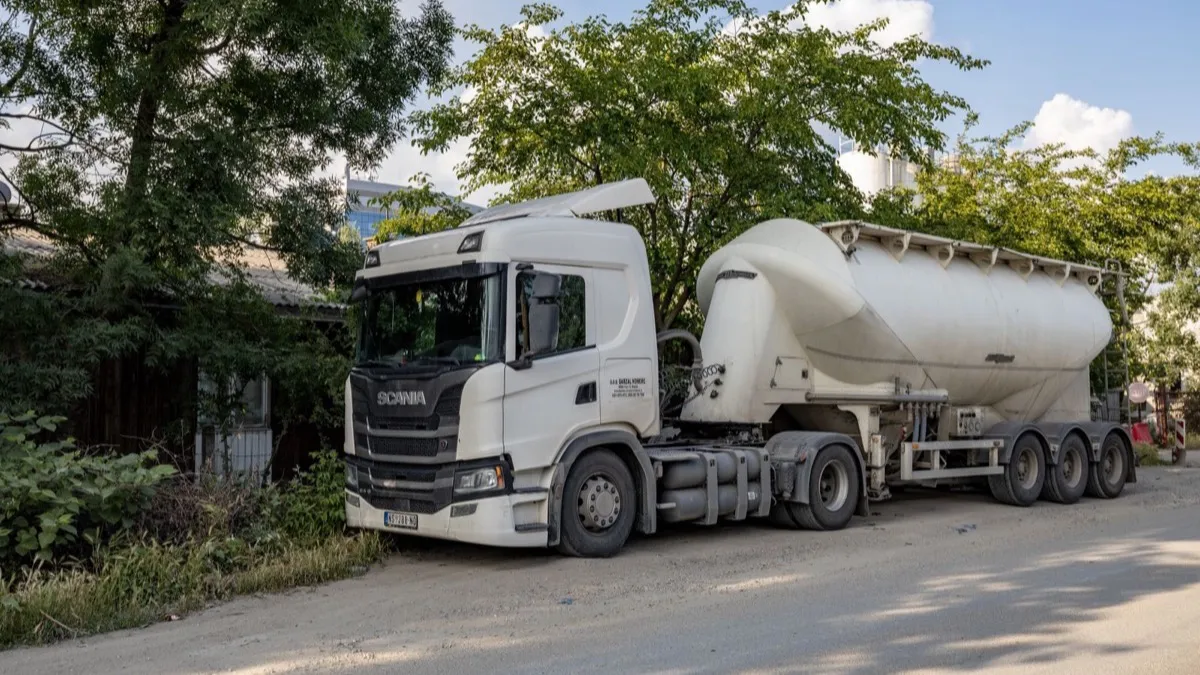
A dispatcher in Lutsk takes a first load into Poland: twenty tonnes of sunflower oil from Gdansk to Lublin. The customer writes one line: "we will file the SENT ourselves, just send us the locator number." An hour of searching turns up pages about 20,000 zł fines, ADR, geolocation and CN codes. One conclusion emerges: this is something about cargo control, and it is expensive.
This article explains SENT from zero. What the register is, which goods fall under it, who files the notification, where the reference number comes from, what the driver does on the road, and which part of it all actually lands on the carrier. For a reader outside Poland: KAS is the Polish National Revenue Administration, PUESC is its portal, and RMPD is a separate notification every non-EU carrier files for a run through Poland.
In brief: SENT is a register of carriage of sensitive goods kept by the Head of KAS under the act of 9 March 2017 · monitoring covers a list from the act (fuels, spirit, dried tobacco, medicines) and a list from a regulation of the Minister of Finance (oils, grain, coal, clothing and footwear), each item with its own threshold · the notification is filed by the consignor, the consignee or the carrier, and the role follows the route rather than the contract (art. 5, 6, 7); the register issues a reference number valid for 10 days (art. 11 ust. 1) · a carrier who files nothing still completes the notification with its own data and the locator number (art. 5 ust. 4), and without a reference number must refuse to take the goods (art. 10 ust. 1) · geolocation data are transmitted by the carrier for the whole Polish leg (art. 10a) · fines: carrier 20,000 zł (art. 22 ust. 1), consignor or consignee 46 % of the gross value and never less than 20,000 zł (art. 21 ust. 1) · a non-EU carrier carries a second, separate duty next to SENT, the RMPD notification, which does not depend on the goods.
SENT is an electronic register in which the Polish revenue administration sees carriage of listed goods: who carries what, from where, to where, and where the vehicle is now. The notification is filed by the consignor, the consignee or the carrier, depending on the route, and the register answers with a reference number without which the carriage may not start. The carrier is always concerned, because it is the carrier who completes the notification and transmits the position.
What SENT is and why it exists
SENT is the system for monitoring the road and rail carriage of goods, created by the act of 9 March 2017 (consolidated text Dz.U. 2024 poz. 1218). Its heart is the register of notifications kept by the Head of KAS: it holds the data from notifications, geolocation data from locators and external systems, and the results of checks (art. 4).
The purpose is fiscal rather than transport-related. Poland watches the trade in goods where excise duty and VAT are easiest to avoid: fuels, spirit, tobacco. That is why the system does not care about carriage as such but about specific CN codes and thresholds: 500 litres of fuel, 500 kilograms of coal, 10 tonnes of grain. Goods off the list are of no interest to the system, however expensive or sensitive they are.
Does every international run into Poland need SENT? No. The system works by goods, not by direction. Furniture, electronics or generators are not covered at all. Twenty tonnes of sunflower oil are covered, even on an ordinary run between two companies.
Which goods are monitored
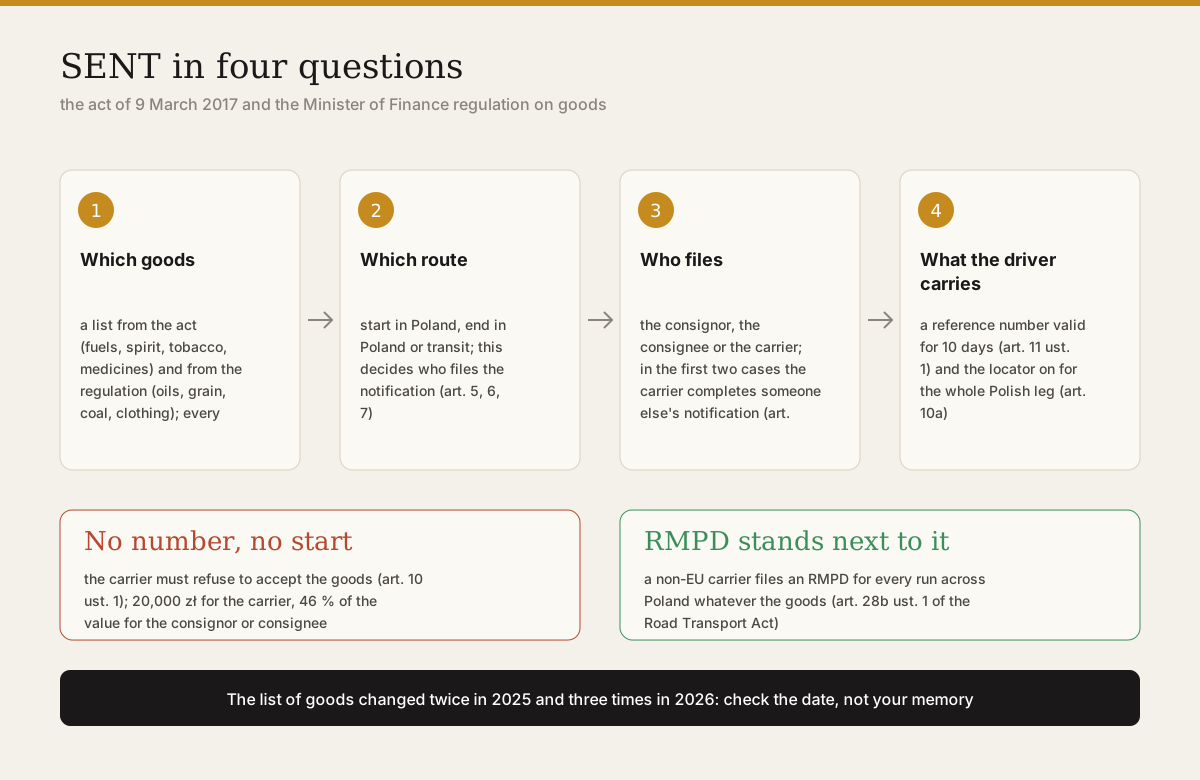
The list has two parts. The first sits in the act itself (art. 3 ust. 2): fuels and oils under codes 2707 and 2710, ethyl alcohol 2207, dried tobacco, solvents, and medicines and medical devices at risk of shortage. The second is in the regulation of the Minister of Finance of 25 April 2022 (consolidated text Dz.U. 2024 poz. 1157 as amended), and that one changes most often: vegetable oils, grain and rapeseed, coal and coke, LPG, and since 17 March 2026 clothing and footwear as well.
Every item has a threshold, and below it no notification is due. For fuels that is 500 litres or 500 kilograms, for coal 500 kilograms, for grain 10 tonnes, for clothing 31.5 kilograms gross per consignment, for footwear 64 items. The current list with thresholds and legal bases is collected in Goods under SENT monitoring, and a quick check by CN code is in the table SENT goods.
The list changed several times in 2025 and 2026, and this is where mistakes happen most easily: the date matters. A run that needed no notification yesterday may need one today, and the other way round, as happened with humanitarian clothing in June 2026.
Who files the notification and when
The role follows the route, not the parties' arrangement. The carriage begins in Poland, say a Polish plant ships oil for export: the consignor files before the carriage starts (art. 5 ust. 1). The carriage ends in Poland, that is goods are brought in from abroad: the consignee files, also before the carriage on Polish territory starts (art. 6 ust. 1). The carriage begins and ends outside Poland, that is transit: the carrier files (art. 7 ust. 1).
Who files for a Gdansk to Lublin run between two Polish companies? The consignor. The carriage begins in the country and the duty sits with the party shipping the goods. The carrier here completes the notification with its own data but does not create it. The roles and the usual confusions are taken apart in Who files SENT, the consignor, the consignee or the carrier.
Notifications go through the PUESC portal, and only a registered user of the portal may file one (art. 9 ust. 1 and 2). A basic PUESC account is therefore needed by anyone who ever completes someone else's notification, the carrier included.
What the reference number is and what the driver does with it
The reference number is the unique identifier of a notification, issued by the register (art. 2 pkt 4). It lives for 10 days from filing (art. 11 ust. 1), which covers any run from western Europe with time to spare for a border queue.
The number goes to the carrier, and the carrier passes it to the driver before the carriage starts (art. 10 ust. 2). The driver carries the number and shows it at a check. Where there is no number, the carrier must refuse to accept the goods for carriage (art. 10 ust. 1). That is not advice but a provision of the act, and it is what protects a carrier whose consignor forgot to file.
When the register is unavailable, the number is replaced by a replacement document together with a confirmation of receipt (art. 9 ust. 5), sent by e-mail to the designated KAS authority.
What the system sees on the road
The register sees more than documents. The carrier must ensure that current geolocation data are transmitted for the whole leg of the carriage on Polish territory (art. 10a ust. 1). They can be sent by the free e-TOLL PL app, by an on-board OBU device, or by an external location system registered in the SENT service on PUESC.
The driver switches the transmission on from the start of the carriage on Polish territory and switches it off no earlier than its end (art. 10b). If the locator is out of order for more than an hour, the driver must stop at the nearest car park and wait for one of the four conditions in the act (art. 10c). A gap in the data costs the carrier 10,000 zł (art. 22 ust. 2a), and that is a separate fine, independent of whether a notification exists.
What a mistake costs
The amounts in SENT are large and barely depend on the value of the cargo. A carrier who failed to file in transit pays 20,000 zł, about 233,000 ₴ at the NBU rate of 11.67 ₴/zł on 25.09.2026 (art. 22 ust. 1). A consignor or consignee who failed to file pays 46 % of the gross value of the goods, and never less than 20,000 zł (art. 21 ust. 1). A driver who set off without a number or with the locator off pays 5,000 to 7,500 zł (art. 32 ust. 1).
The authority may waive a fine where an important interest of the party or the public interest requires it (art. 21 ust. 3, art. 22 ust. 3). It is a narrow provision, but replies to a summons are built on it. The full table of amounts with the legal bases is collected in SENT and RMPD fines 2026.
What of this lands on a non-EU carrier
For a carrier from outside the EU, SENT matters in three ways. First: transit from an EU country to a third country through Poland, say oil from Germany to Ukraine. Here the carrier files the notification itself (art. 7 ust. 1). Second: someone else's notification, filed by the consignor or the consignee, has to be completed with the carrier's data, that is the company name, the tax number, the plates, the dates and the locator number (art. 5 ust. 4). Third: geolocation, which always sits with the carrier.
Next to SENT stands a separate duty that carrier chats mention far less often. A non-EU carrier files an RMPD notification for every run across Poland, and that duty does not depend on the goods: it comes from the Road Transport Act (art. 28b ust. 1), not from the SENT list. The difference between the two systems is taken apart in The difference between SENT and RMPD nobody explains.
What to do
- Check the goods by CN code against the list before loading, not at the border.
- Establish who files on this route: start in Poland is the consignor, end in Poland is the consignee, transit is you.
- Open a basic PUESC account if you have none: without it you cannot complete anyone else's notification.
- Obtain the reference number before loading and hand it to the driver with the documents.
- Complete the other party's notification with your data: company, tax number, plates, dates, locator number.
- Switch the locator on when entering Poland and leave it on until you leave.
- File the RMPD for every run, whether or not a SENT notification is due.
What not to do
- Do not set off without a reference number. The act tells you to refuse the goods, and that is your protection, not a formality.
- Do not rely on "we have filed everything". The number belongs in the driver's hands, not in a manager's inbox.
- Do not treat SENT as a substitute for RMPD. Two systems, two separate fines.
- Do not check the list once a year. It changed twice in 2025 and three times in 2026.
- Do not switch the locator off on the yard before unloading. A gap in the data is a separate 10,000 zł.
Where technology fits in
Sigil handles RMPD declarations, that is exactly the part that sits with a non-EU carrier. CMR data go into the RMPD100 form one to one, the dispatcher confirms every field, and only after that confirmation does the filing go to PUESC. While the declaration is active, the system watches the position in SENT-GEO and warns the dispatcher when the register stops seeing it.
Sigil does not file SENT notifications: they are filed by the consignor, the consignee, or the carrier in transit, each from their own PUESC account.
Sigil handles RMPD declarations. The SENT notification is filed by the consignor or the consignee, and in transit by the carrier itself on PUESC.
A demo or training for your team
30 minutes online. We show how Sigil™ files an RMPD from a CMR and answer questions about your runs.
Frequently asked questions
- What is SENT in plain words?
- It is the Polish register of carriage of sensitive goods. It shows who carries what, from where, to where, and where the vehicle is. It is kept by the Head of KAS under the act of 9 March 2017, and its purpose is fiscal: control over the trade in fuels, spirit, tobacco and the other listed goods.
- Does every run into Poland need a SENT notification?
- No. The system works by goods and thresholds, not by direction. Furniture, electronics or generators are not covered. Fuels from 500 l, coal from 500 kg, grain from 10 t and the rest of the list are.
- Who files the SENT notification?
- It depends on the route. A carriage starting in Poland is the consignor (art. 5), one ending in Poland is the consignee (art. 6), transit through Poland is the carrier (art. 7). In the first two cases the carrier completes the notification with its own data.
- How long is the reference number valid?
- 10 days from filing (art. 11 ust. 1 of the SENT Act). If the carriage runs longer, a new notification is filed quoting the previous number.
- Does SENT replace the RMPD notification?
- No. They are independent. A non-EU carrier files an RMPD for every run across Poland under art. 28b ust. 1 of the Road Transport Act, even when the goods are not covered by SENT.
Sources
Legislation, as in force on the publication date:
- Act of 9 March 2017 on the system for monitoring the road and rail carriage of goods (SENT Act), ISAP, consolidated text Dz.U. 2024 poz. 1218: art. 2 pkt 4, art. 3 ust. 2, art. 4, art. 5 ust. 1 and 4, art. 6 ust. 1, art. 7 ust. 1, art. 9, art. 10, art. 10a to 10c, art. 11 ust. 1, art. 21 ust. 1, art. 22 ust. 1 and 2a, art. 32 ust. 1.
- Regulation of the Minister of Finance of 25 April 2022 on goods covered by the monitoring system, ISAP, consolidated text Dz.U. 2024 poz. 1157 as amended by 2025 poz. 1244 and 1704 and 2026 poz. 589, 813 and 814: § 1 and § 2.
- Act of 6 September 2001 on road transport, ISAP: art. 28b ust. 1 (the RMPD duty of a non-EU carrier).
Authorities:
- Carriage of goods covered by monitoring (SENT), PUESC: service descriptions, notification forms and the roles of the parties.
- SENT FAQ, PUESC: answer 02.19 on the status of the parties (ID 782111321).
- List of goods covered by SENT, PUESC: the list in force, with thresholds.
Rate: official hryvnia to zloty rate, National Bank of Ukraine, 11.67 ₴/zł on 25.09.2026.
Read next
- Who files SENT, the consignor, the consignee or the carrierThe role in SENT follows the route, not the contract. Who files on import, export and transit, what the carrier completes and who pays for another's mistake.
- The 2026 list of goods under SENT monitoringThe 2026 SENT goods list with thresholds and CN codes: fuels, oils, grain, honey, poultry, clothing and footwear in 2026. Why Ukrainian goods count.
- The difference between SENT and RMPD nobody explainsSENT follows the goods, RMPD follows a non-EU carrier. Who files which, when both meet on one run, and what a missing one costs: 12,000 and 20,000 zł.
- SENT and RMPD fines 2026, amounts, who pays, how to appealEvery SENT and RMPD fine in one table: amount in złoty and hryvnia, who pays, article number with a link. Appeal deadlines and the difference between two acts.
Sigil™ turns a CMR into an RMPD declaration and files it with PUESC — with every field checked against the original.
More on this topic: SENT