SENT
The SENT system in Poland, who files and fines
SENT is Poland's electronic supervision system for listed goods. Which goods are covered, who files the notification and what a mistake costs the carrier.
Published · Updated · Author: Makaiev Kostiantyn Oleksandrovych, founder of Sigil RMPD
SENT, the System Elektronicznego Nadzoru Transportu, is Poland's electronic supervision system for the carriage of listed goods above a threshold, such as fuel, oils, cereals, clothing and footwear. The consignor, the consignee or, in transit, the carrier files it, and the number is valid for 10 days. A carrier faces 20 000 zł, and SENT does not replace RMPD.
In brief: SENT is Poland's register for the carriage of listed goods, among them fuel, spirits, edible oils, cereals, honey, coal, clothing and footwear · it covers listed goods above a threshold, not every load, and the test is the CN code · the notification is filed by the consignor (goods leaving Poland), the consignee (goods arriving in Poland) or the carrier (transit), and the route decides the role, not the contract · in the first two cases the carrier completes the notification with its own details and its locator number · the reference number is valid 10 days from issue · a carrier faces 20 000 zł under SENT, 10 000 zł for incomplete data and another 10 000 zł for a gap in geolocation · SENT does not replace RMPD, which a non-EU carrier files separately for every trip.
A dispatcher takes a job: 20 tonnes of sunflower oil from Vinnytsia to Poznań. The consignee says nothing about SENT, assuming it is "the carrier's business". At the Polish border the inspector asks for two numbers, and the driver has only the RMPD one.
SENT, the System Elektronicznego Nadzoru Transportu, is an electronic supervision system run by the Polish tax and customs administration under an Act of 9 March 2017. It tracks the goods most exposed to VAT and excise fraud rather than the carrier. For a foreign haulier that means two questions before every job: is the cargo on the list, and who files the notification for this route.
What SENT is and why Poland runs it
Poland introduced SENT to follow fuel, spirits and other sensitive goods from loading to unloading. Each listed shipment receives a reference number in the register, and the truck reports its position for the whole Polish leg. How the register works in practice is explained in what SENT is in Poland.
The register runs on the PUESC portal, the same place a carrier files RMPD, but the two registers rest on different laws. SENT is about the goods, RMPD about the haulage operation, and a carrier from Ukraine often needs both numbers on one trip. Where one ends and the other begins is set out in SENT and RMPD compared.
Which goods are covered by SENT
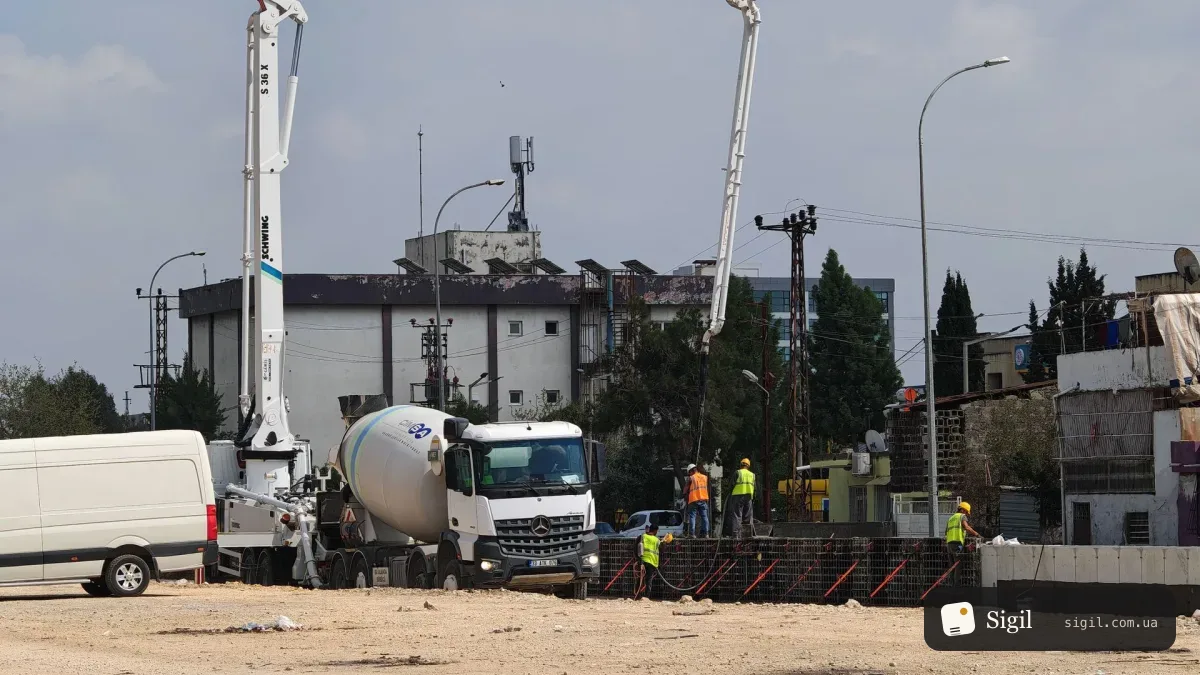
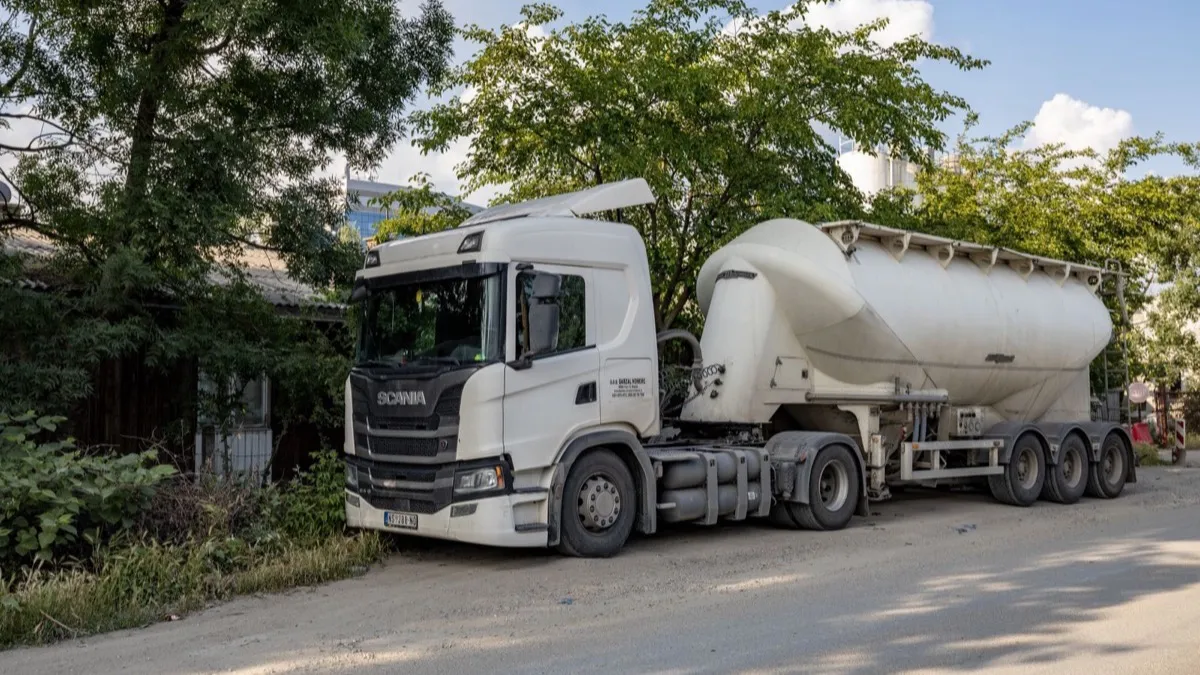
The list has two parts. The Act names fuel, spirits, dried tobacco and medicines, and a regulation of the Minister of Finance adds edible oils from 500 kg, cereals and rapeseed from 10 tonnes, honey from 10 kg, eggs, poultry meat, frozen berries, coal and coke from 500 kg. Clothing and footwear have been covered since 17 March 2026, with thresholds of 31.5 kg and 64 items since 20 June 2026. Concrete is not on the list yet, and what the new draft act proposes for it and for penalties across SENT is explained in the text on SENT for concrete.
The list changes several times a year. From 28 October 2026 scrap metal under nineteen waste codes leaves SENT, and from 31 October 2026 oils and fats under CN 1518 join it. The current list with thresholds and exemptions is kept in the SENT goods list for 2026.
Whether a load is covered depends on the CN code on the invoice, not on the description in the CMR. A single code can be checked in a minute in our search of the list.
Does sunflower oil from Ukraine need SENT? Yes, from 500 kg. The Polish consignee files the notification, and the carrier completes it with its own details.
Who files the SENT notification
The route decides. A shipment that starts in Poland is notified by the consignor (Article 5(1)). One that ends in Poland is notified by the consignee (Article 6(1)). A transit through Poland is notified by the carrier itself on form SENT300 (Article 7(1)).
Only a business can be a consignor or consignee under the Act. If either side is a private person, no SENT notification is required. Every variant, with examples, is covered in who files SENT.
When the consignor or consignee files, the carrier files nothing of its own but must complete the notification: company, vehicle numbers, dates, place of delivery, transport document number and locator number (Article 5(4)). Without that completion the trip has a number, but the carrier's own duty is still unmet.
What the carrier has to do
The carrier receives the reference number from the party that filed, and without it must refuse to take the goods (Article 10(1)). The driver carries the number for the whole journey. It is valid for 10 days from the day it is issued (Article 11(1)), so a notification filed a week before the trip leaves three days for the trip itself.
For the whole Polish leg the carrier sends its position to SENT-GEO, through the e-TOLL PL app, an OBU device or an external ZSL system (Article 10a). A gap longer than an hour means stopping until the signal returns. What the law demands of the locator, and what to do when it fails, is explained in SENT-GEO locator requirements.
In a transit without a customs procedure, the carrier files SENT300 itself, before entering Poland. With the number, the service may summon the truck for inspection at the customs office near the exit point (Article 12a). How that works at Korczowa, and what ignoring it costs, is described in SENT transit and the summons for inspection.
How to check a SENT filing and what a "SENT document" is
"Checking SENT" covers three different things, and the answers differ.
First. Whether the goods fall under SENT at all, that is whether the CN code sits in the list. That is a question for the goods list, and the goods checker answers it by code rather than by the name on the invoice.
Second. Whether a filing is still valid and where the truck was last. The SENT406 form on PUESC serves that purpose, free of charge just like its twin RMPD406 for carriage filings. It needs the reference number, the registration number and the locator number.
Third, and here the phrase "SENT document" hides itself. There is no piece of paper called a "SENT document". SENT is a filing in the register, and what travels with the truck is the reference number rather than a form. Paper appears in one case only: where the register is unavailable, carriage starts with a document replacing the filing, which then has to be confirmed in the register.
What a SENT mistake costs
Each party has its own penalty. A consignor or consignee who files nothing pays 46 % of the gross value of the goods, at least 20 000 zł (Article 21(1)). The carrier pays 20 000 zł for a missing transit notification, goods that do not match or a truck not presented when summoned (Article 22(1)).
An incomplete notification costs the carrier 10 000 zł (Article 22(2)), and a gap in geolocation another 10 000 zł (Article 22(2a)). A driver who sets off without the number or breaks the locator rules faces a fine of 5 000 to 7 500 zł (Article 32(1)). The full table, side by side with RMPD, is in SENT and RMPD fines 2026, and the fines calculator works out a specific case.
A carrier from a country without a mutual enforcement agreement pays the penalty at the roadside as a deposit (Article 31(1)). Getting it back is covered in the RMPD and SENT deposit, and the 14-day appeal is explained in how to appeal a SENT or RMPD penalty.
When SENT is not needed
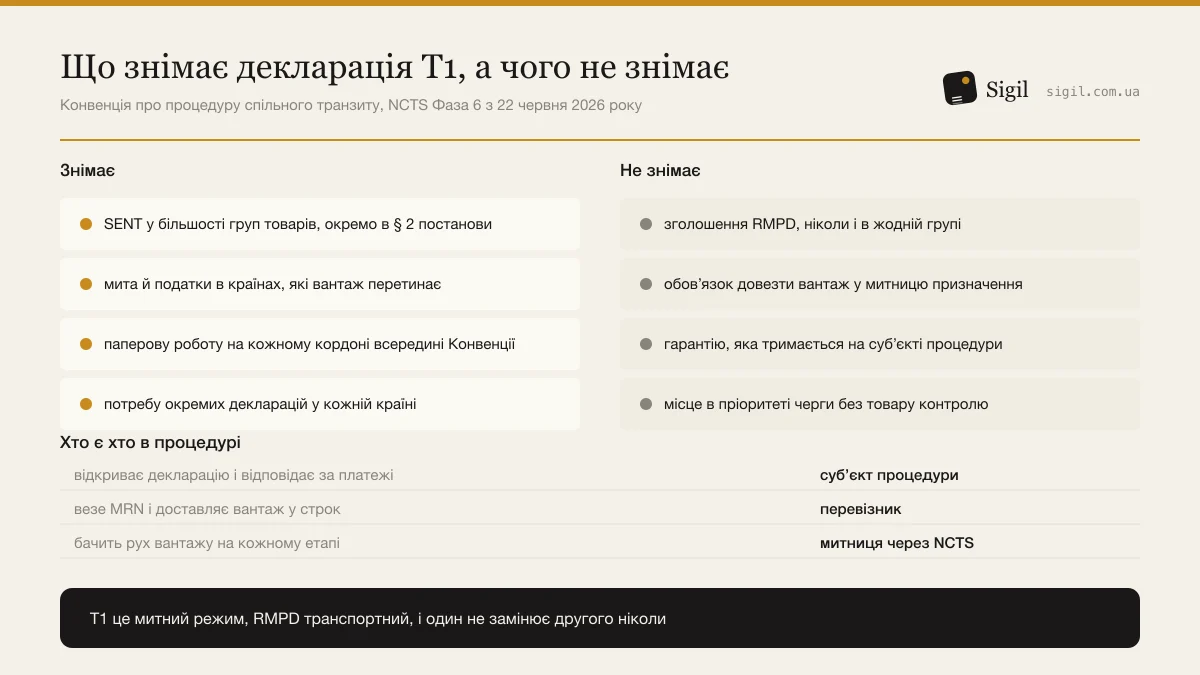
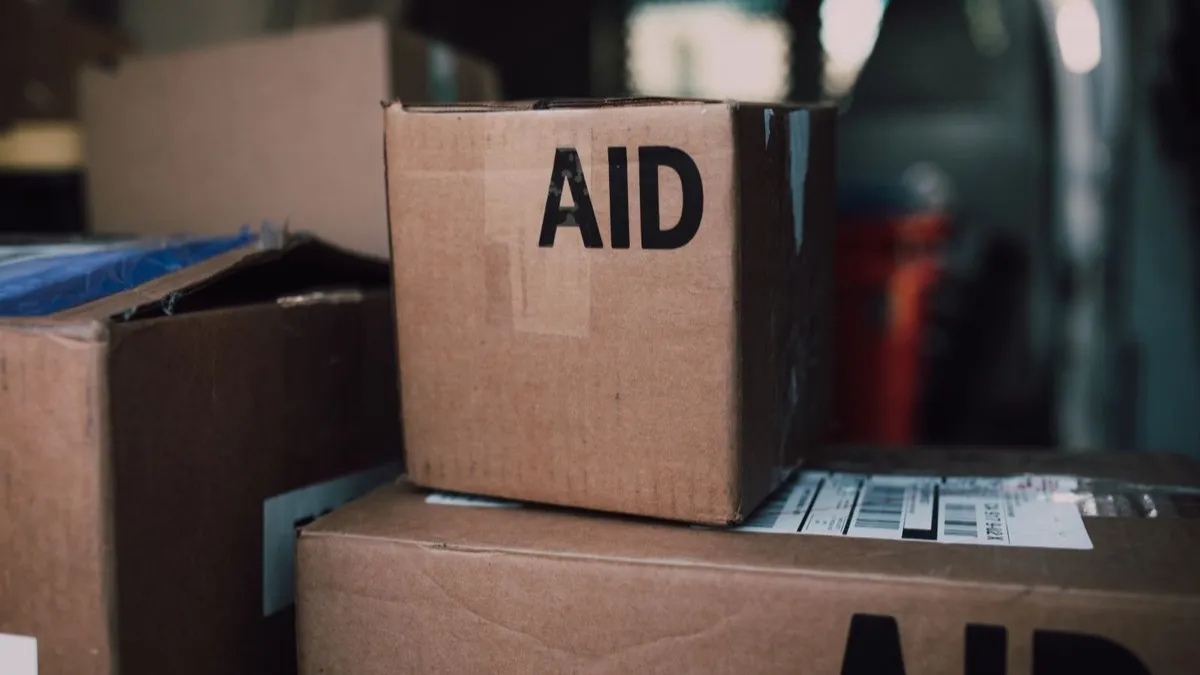
SENT does not apply to goods outside the list or below the threshold. It does not apply when either side is not a business, nor to a transit under the T1 customs procedure. Humanitarian loads of clothing and footwear have their own exemption since 20.06.2026, while fuel and food in the same load stay under SENT, as SENT and humanitarian aid explains.
The CN code also settles borderline cases. Hard coal 2701 is covered from 500 kg, charcoal 4402 is not on the list at all, and under ADR the position is reversed, as set out in coal, SENT and ADR.
What to do
- Check the CN code from the invoice against the SENT list before accepting the job.
- Agree with the consignor or consignee who files the notification, and get the reference number before loading.
- Complete the notification with your details and locator number when someone else files it.
- Switch the locator on before entering Poland and keep it on until you leave, including in car parks.
- File RMPD separately, because a SENT number does not replace it.
What not to do
- Do not load listed goods without a SENT number. The law requires the carrier to refuse, and a missing transit notification costs 20 000 zł.
- Do not treat a SENT number as a substitute for RMPD. They are two registers with two separate penalties.
- Do not switch the locator off in the car park before the border. A gap longer than an hour means stopping and a risk of 10 000 zł.
- Do not ignore a summons for inspection in transit. A truck not presented costs the carrier 20 000 zł.
Where technology fits in
Sigil files RMPD, the notification of the haulage operation itself, through the official PUESC web service using the carrier's own credentials. The dispatcher photographs the CMR, checks the data against the original one to one and confirms, and only then does the notification go to the register. The locator number entered in the RMPD is the same one that reports the position to SENT-GEO for SENT.
Sigil handles RMPD declarations. The SENT notification is filed on PUESC by the consignor, the consignee or the carrier in transit, and Sigil does not offer that function.
A demo or training for your team
30 minutes online. We show how Sigil™ files an RMPD from a CMR and answer questions about your runs.
Frequently asked questions
- What is SENT?
- A Polish register in which the carriage of listed goods is declared. Its full name is the goods carriage monitoring system, it runs on the PUESC portal, and the filing is made by the consignor or the consignee rather than the carrier.
- Which goods are covered by SENT?
- Those listed by CN code in the finance minister's regulation. Mainly fuels, oils, alcohol, tobacco and dried tobacco, and since 2026 clothing and footwear as well. Quantity thresholds matter too, so the code is what gets checked, not the name on the invoice.
- How is a SENT filing checked?
- It depends what is being checked. Whether the goods fall under SENT is answered by checking the CN code. Whether a filing is valid and where the vehicle is, is answered by the free SENT406 form on PUESC, which needs the reference number, the registration number and the locator number.
- What is a “SENT document”?
- There is no such document. SENT is a filing in the register, and what travels with the vehicle is the reference number. Paper appears only where the register is unavailable: carriage then starts with a document replacing the filing.
- Does a SENT number replace an RMPD filing?
- No. These are two separate duties from two acts. SENT concerns the goods and is filed by the consignor or consignee; RMPD concerns the carriage itself and is filed by the non-EU carrier, even when the vehicle runs empty.
Sources
Legislation, as in force on 19.10.2026:
- Ustawa z dnia 9 marca 2017 r. o systemie monitorowania drogowego i kolejowego przewozu towarów oraz obrotu paliwami opałowymi (SENT Act), ISAP, consolidated text Dz.U. 2024 poz. 1218: Articles 2(6) and (7), 3(2), 5(1), (4) and (5), 6(1), 7(1), 10(1), 10a, 11(1), 12a, 21(1), 22(1), (2) and (2a), 31(1), 32(1).
- Rozporządzenie Ministra Finansów z dnia 25 kwietnia 2022 r. w sprawie towarów, których przewóz jest objęty systemem monitorowania drogowego i kolejowego przewozu towarów oraz obrotu paliwami opałowymi, ISAP, consolidated text Dz.U. 2024 poz. 1157 as amended, including Dz.U. 2026 poz. 589, 813 and 1325: the list of goods and thresholds.
- Ustawa z dnia 6 września 2001 r. o transporcie drogowym (Road Transport Act), ISAP, consolidated text Dz.U. 2025 poz. 1490: Article 28b(1), the RMPD duty alongside SENT.
Authorities:
- Przewóz towarów objęty monitorowaniem (SENT), PUESC: service description, roles of the parties, forms.
- FAQ SENT, PUESC: answer 02.19 on parties that are not businesses.