SENT
The difference between SENT and RMPD nobody explains
SENT follows the goods, RMPD follows a non-EU carrier. Who files which, when both meet on one run, and what a missing one costs: 12,000 and 20,000 zł.
Published · Updated · Author: Makaiev Kostiantyn Oleksandrovych, founder of Sigil RMPD
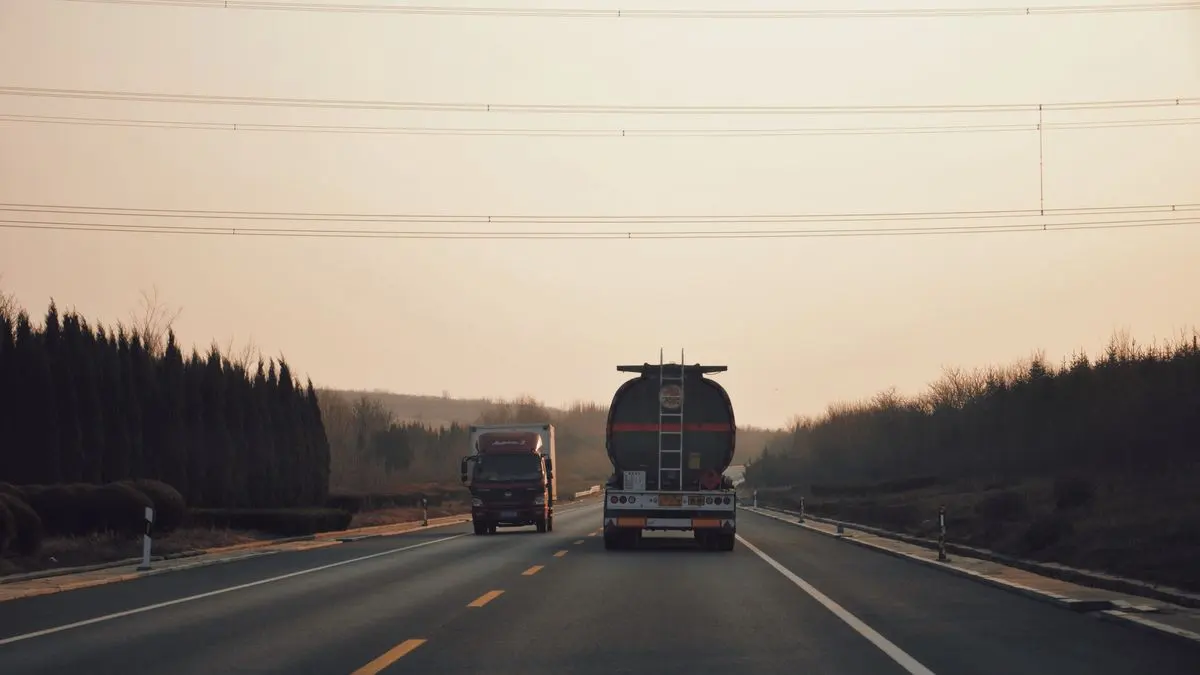
A truck from Kovel carries 20 tonnes of sunflower oil to a consignee in Lublin. The consignee calls the dispatcher: "We filed the SENT, here is the number." The dispatcher writes the number on the CMR and sends the truck. At a lay-by near Chełm an inspector asks the driver for two numbers. The second one, RMPD, does not exist. The carrier pays 12,000 zł, about 143,000 ₴. The consignee broke no rule.
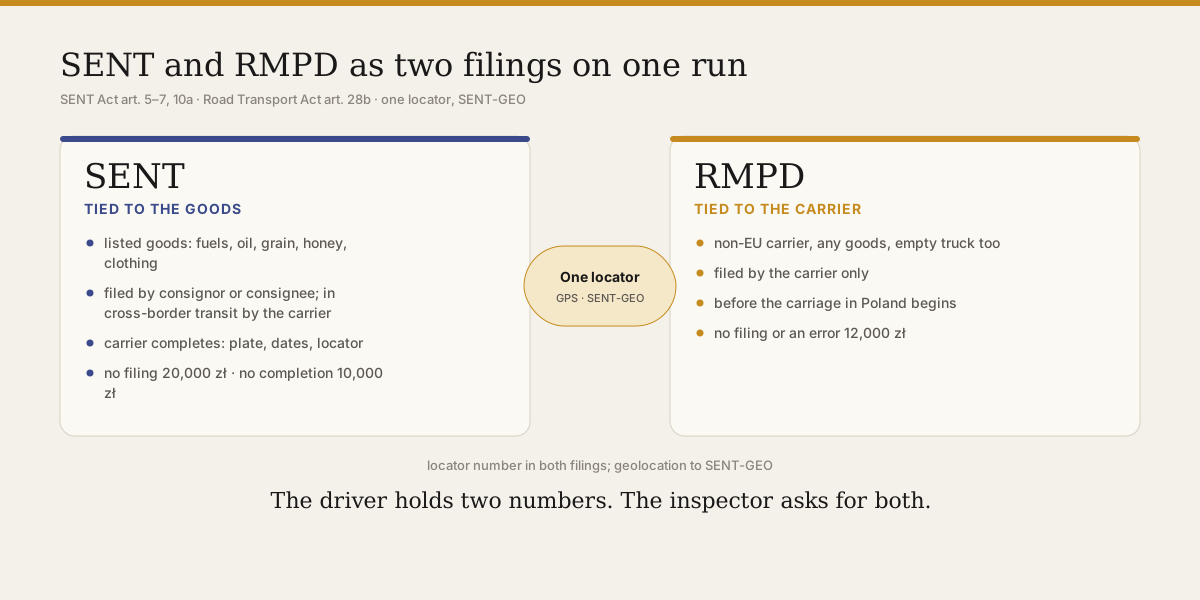
SENT and RMPD are two separate duties under two Polish acts, and they often meet on one run. SENT follows the goods: the consignor or the consignee files it, the carrier only completes it. RMPD follows the carrier: a carrier from outside the EU files it himself, for every run through Poland, loaded or empty. One number does not replace the other.
In short: SENT is tied to goods on a list (fuels, oils, grain, honey, clothing and others), RMPD is tied to a non-EU carrier and does not depend on the goods · SENT is filed by the consignor (goods leaving Poland) or the consignee (goods entering Poland), and the carrier adds his own data; RMPD is filed only by the carrier · the driver must hold both numbers before entering Poland, and the inspector asks for both · a missing RMPD costs the carrier 12,000 zł, an uncompleted SENT 10,000 zł, a SENT not filed in cross-border transit 20,000 zł · one locator serves both: geolocation goes to SENT-GEO for SENT and for RMPD alike · Ukrainian goods in T1 customs transit through Poland are outside SENT, but RMPD is always required.
What SENT is and what RMPD is
SENT is Poland's system for monitoring the carriage of goods the state treats as tax-sensitive. It was set up by the Act of 9 March 2017 on the system for monitoring road and rail carriage of goods and trade in heating fuels (the SENT Act). The duty arises when the trailer holds goods from the list: fuels, alcohol, dried tobacco, and by a Minister of Finance regulation also vegetable oils, grain, honey, poultry, eggs, and from 17 March 2026 clothing and footwear. The full list with thresholds is in the article Goods under SENT monitoring. Bricks or furniture: no SENT. 600 kg of oil: SENT.
RMPD is the Rejestr Międzynarodowych Przewozów Drogowych, the register of international road carriage. It was introduced by art. 28b of the Road Transport Act and has applied since 1 November 2024. The duty arises when international carriage of goods through Poland is performed by a foreign operator travelling on a permit, on an ECMT licence or on a permit exemption under a bilateral agreement, which in practice means a carrier from outside the EU. A Ukrainian, Moldovan or Turkish carrier is always this case. The goods do not matter: oil, bricks, an empty trailer, all fall under RMPD. An EU carrier falls under art. 28b only where a bilateral agreement requires a permit for carriage to or from a third country (art. 28 ust. 1a).
The confusion comes from the fact that both filings live in the same register on the PUESC portal, both produce a reference number, and both use the same locator. Art. 28b ust. 1 says outright that the RMPD is filed to the "filing register" defined in the SENT Act. Hence the shorthand "SENT-RMPD" in inspectorate notices, and the carriers' belief that it is one thing. It is two filings, two numbers and two fines.
How SENT differs from RMPD
| SENT | RMPD | |
|---|---|---|
| Tied to | goods on the list | a carrier from outside the EU |
| Act | SENT Act, art. 3, 5, 6, 7 | Road Transport Act, art. 28b |
| Who files | consignor, consignee or carrier, depending on the route | the carrier only |
| What the carrier does | completes someone else's SENT with his data (art. 5 ust. 4, art. 6 ust. 3) | files the whole thing himself |
| When | before the carriage in Poland begins | before the carriage in Poland begins |
| Empty truck | not applicable | required (art. 28b ust. 3 pkt 8) |
| PUESC form | SENT100 | RMPD100 |
| Fine for the carrier | 20,000 zł for no filing (art. 22 ust. 1); 10,000 zł for no completion (art. 22 ust. 2) | 12,000 zł for no filing or data inconsistent with the facts (Annex 3, item 3.2a) |
| Fine for the driver | 5,000 to 7,500 zł (art. 32 ust. 1) | 1,500 zł (Annex 1, item 2a) |
| Geolocation | mandatory, art. 10a | mandatory, via art. 28b ust. 5 |
| Who imposes the fine | head of the customs and tax office | regional road transport inspectorate (WITD) |
Amounts in hryvnia at the National Bank of Ukraine rate of 11.94 ₴/zł on 14 September 2026: 12,000 zł is 143,000 ₴, 20,000 zł is 239,000 ₴, 10,000 zł is 119,000 ₴.
Who files SENT on which route
It depends on where the carriage starts and ends. The act gives three cases.
Goods enter Poland from abroad. Oil from Ternopil to Lublin. The consignee in Poland files the SENT (art. 6 ust. 1), receives the number and passes it to the carrier. Before the carriage in Poland begins, the carrier completes the filing: registration plate, date, locator number (art. 6 ust. 3).
The carriage starts in Poland. Oil from a Polish mill to Kyiv. The consignor files the SENT (art. 5 ust. 1). The carrier completes it the same way (art. 5 ust. 4).
Transit between countries. Oil from Germany through Poland to Ukraine. Here the carrier files the SENT (art. 7 ust. 1), because the act describes carriage from one member state to another or to a third country. This is the only route where SENT rests entirely on the carrier, and the place where a Ukrainian carrier most often does not know they are the one filing.
Do 22 tonnes of maize from Ukraine in T1 customs transit through Poland to Germany fall under SENT? No. Goods under the customs transit procedure are exempt: for grain by § 2 ust. 9 pkt 2 of the regulation, for fuels and alcohol by art. 3 ust. 6 pkt 2 of the act. But RMPD is required for that run, because the carrier is from outside the EU.
In all three cases the RMPD is filed by the carrier and by nobody else. A consignor or forwarder cannot file it on his behalf: the filing goes from the carrier's PUESC account and carries his permit number. Who exactly must file and for which vehicles is in the article What RMPD is and who must file it.
What happens when there is a SENT but no RMPD
SENT filed, no RMPD: that is the case from the first paragraph and the most common one. The consignee filed the SENT, the carrier completed it, the driver holds the SENT number. The dispatcher decided that a number exists, so the run is filed. The WITD inspector sees the SENT in the register but sees no RMPD for this registration plate.
The carrier pays 12,000 zł for carriage without a filing to the register (Annex 3, item 3.2a). The driver pays 1,500 zł for not presenting an RMPD number (Annex 1, item 2a). The act adds one more thing: where a permit or an ECMT carnet is required, a run without an RMPD filing is treated as performed without a permit (art. 28b ust. 10). From a carrier based in a country with no enforcement agreement, the inspectorate collects a deposit on the spot (art. 94 ust. 3), and the truck waits until it is paid. The consignee who filed the SENT broke nothing, because RMPD is not his duty. He loses the delivery date.
Will the inspector accept the SENT in place of the RMPD if the data are the same? No. They are two duties under two acts. The roadside check looks for an RMPD by registration plate, and someone else's SENT number does not satisfy it.
What happens when there is an RMPD but no SENT
The carrier filed the RMPD, the driver holds the number, the locator works. On the trailer, 5 tonnes of honey from Vinnytsia for a consignee in Poland. The consignee did not file a SENT, because "honey is not fuel".
The consignee pays 46 % of the gross value of the goods, at least 20,000 zł (art. 21 ust. 1). The carrier is exposed too: the act obliges him to refuse to accept listed goods for carriage if he has not received a reference number (art. 10 ust. 1), and a driver who started the carriage without a SENT number pays a fine of 5,000 to 7,500 zł (art. 32 ust. 1). If the number existed but the carrier did not complete the filing with his data, that is 10,000 zł (art. 22 ust. 2). All amounts in one table are in the article SENT and RMPD fines 2026.
Must the carrier know that the goods fall under SENT if the consignor did not say so? Yes. The duty to refuse carriage without a number rests on the carrier (art. 10 ust. 1), and not knowing the list is no defence. The CN code on the CMR or invoice has to be checked against the list before loading.
How SENT and RMPD meet on one run
A truck from Kovel with oil for Lublin. The consignee files SENT100 and sends the number. The carrier completes the SENT with his data, files RMPD100 and receives a second number. The driver has both numbers before the border. The locator is one: its number is entered in both the SENT and the RMPD, and geolocation goes to SENT-GEO for both filings (art. 10a ust. 1 for SENT, the same duty for RMPD via art. 28b ust. 5). After unloading, the carrier closes the RMPD; the consignee closes the SENT by confirming receipt of the goods (art. 6 ust. 4).
A data error is fined separately in each filing. A registration plate with a space in the RMPD is 12,000 zł as data inconsistent with the facts (item 3.2a); the same space in the SENT completion is 10,000 zł (art. 24 ust. 1 pkt 2). One digit can cost twice.
Which
The difference shows most clearly on an aid run: SENT may not be due at all, while RMPD always is. That case is taken apart in Does humanitarian aid need a SENT notification in Poland.
What to do
- Before every run to or through Poland, answer two questions separately: are the goods on the SENT list, and is the carrier from outside the EU. For a Ukrainian carrier the second answer is always yes.
- File RMPD100 for every run through Poland, loaded or empty, before entry. This is the carrier's duty regardless of who filed what under SENT.
- If the goods are on the SENT list, establish before loading who files: the consignee for goods entering Poland, the consignor for goods leaving, the carrier for transit between countries.
- Do not accept listed goods without a SENT number. The act gives the carrier the right and the duty to refuse (art. 10 ust. 1).
- Complete someone else's SENT with the carrier's data before the carriage in Poland begins: registration plate, dates, locator number. Without it, 10,000 zł.
- Give the driver both numbers in writing, on the CMR or in a message. The inspector asks for both, and the driver has to know they are two different numbers.
- Check that the locator number is the same in the SENT and in the RMPD, and that the locator is switched on before entry. One device serves both filings.
What not to do
- Do not treat a SENT number from the consignee as a substitute for the RMPD. A missing RMPD costs the carrier 12,000 zł, and someone else's SENT changes nothing.
- Do not decide "SENT is not our duty" and skip checking the goods. Accepting listed goods without a number is the carrier's breach (art. 10 ust. 1), and the driver's fine is up to 7,500 zł.
- Do not skip the RMPD for an empty truck. The act requires a filing with or without cargo (art. 28b ust. 3 pkt 8).
- Do not enter data differently in the two filings. A mismatch between SENT and RMPD is two separate fines for one mistake.
- Do not read "SENT-RMPD" as the name of one document. It is the SENT register, in which two different filings sit.
Where Sigil fits in
Sigil handles the RMPD filing on the carrier's side: it reads the data off the CMR, shows them to the dispatcher for a one-to-one check and, after confirmation, sends RMPD100 to PUESC, then polls the locator's position during the run and alerts when the signal is lost. Sigil does not file or complete the SENT notification: that is done by the consignor, the consignee or the carrier on the PUESC portal. When a run carries both duties, RMPD goes through Sigil and SENT is handled separately.
Sigil handles RMPD declarations. The SENT notification for the goods is filed by the consignor or the consignee, and the carrier completes it on PUESC.
A demo or training for your team
30 minutes online. We show how Sigil™ files an RMPD from a CMR and answer questions about your runs.
Frequently asked questions
- Does a SENT replace the RMPD filing?
- No. They are two duties under two acts. SENT is tied to the goods and is filed by the consignor or the consignee; RMPD is tied to a non-EU carrier and is filed by the carrier himself (art. 28b of the Road Transport Act). Without an RMPD the carrier pays 12,000 zł, even when a SENT exists.
- Is an RMPD needed when the goods are not on the SENT list?
- Yes. RMPD does not depend on the goods. A non-EU carrier files it for every international carriage through Poland, loaded or empty (art. 28b ust. 3 pkt 8).
- Who files the SENT when a Ukrainian carrier brings goods to Poland?
- The consignee in Poland (art. 6 ust. 1 of the SENT Act). He passes the number to the carrier, and before the carriage in Poland begins the carrier completes the filing with the registration plate, dates and locator number (art. 6 ust. 3). Without completion the carrier pays 10,000 zł.
- Are two locators needed for SENT and RMPD?
- No, one. The number of the same locator is entered in both filings, and geolocation goes to SENT-GEO for both (art. 10a ust. 1 of the SENT Act, for RMPD via art. 28b ust. 5).
- Do Ukrainian goods in T1 transit through Poland fall under SENT?
- No. Goods under the customs transit procedure are exempt from SENT (art. 3 ust. 6 pkt 2 of the act; for agricultural goods § 2 ust. 9 of the regulation). An RMPD is required for such a run.
Sources
Legislation, as in force on the date of publication:
- Ustawa z dnia 9 marca 2017 r. o systemie monitorowania drogowego i kolejowego przewozu towarów oraz obrotu paliwami opałowymi, ISAP, consolidated text: art. 2 pkt 8 and 9, art. 3 ust. 2 and 6, art. 5 ust. 1, 4 and 5, art. 6 ust. 1, 3 and 4, art. 7 ust. 1, art. 8, art. 10 ust. 1, art. 10a ust. 1, art. 21 ust. 1, art. 22 ust. 1 and 2, art. 24 ust. 1 pkt 2, art. 32 ust. 1.
- Ustawa z dnia 6 września 2001 r. o transporcie drogowym, ISAP, consolidated text: art. 28 ust. 1 and 1a, art. 28b ust. 1, 3, 5 and 10, art. 28c, art. 94 ust. 3, załącznik nr 1 (lp. 2a), załącznik nr 3 (lp. 3.1, 3.2a).
- Rozporządzenie Ministra Finansów z dnia 25 kwietnia 2022 r. w sprawie towarów, których przewóz jest objęty systemem monitorowania drogowego i kolejowego przewozu towarów oraz obrotu paliwami opałowymi, ISAP, consolidated text Dz.U. 2024 poz. 1157 as amended by Dz.U. 2025 poz. 1244 and poz. 1704: § 1, § 2 ust. 9 and 10.
Services on the PUESC portal:
- Przewóz towarów objęty monitorowaniem (SENT), PUESC.
- Zgłoszenie przewozu w przypadku międzynarodowego przewozu drogowego rzeczy, PUESC.
Exchange rate: official hryvnia to złoty rate, National Bank of Ukraine, 11,94 ₴/zł on 14.09.2026.
Read next
- The 2026 list of goods under SENT monitoringThe 2026 SENT goods list with thresholds and CN codes: fuels, oils, grain, honey, poultry, clothing and footwear in 2026. Why Ukrainian goods count.
- What an RMPD is and who must file itRMPD from scratch: what the filing is, who must file it since 1 November 2024, when it is not needed, how it differs from SENT, what happens at entry without it
- Which PUESC account a carrier needsBasic or extended PUESC account: what each allows, what it takes, how long. A carrier needs only basic for RMPD; company registration is for consignors only.
- Does humanitarian aid need a SENT notification in PolandSince 20 June 2026 humanitarian clothing and footwear are outside SENT. What exactly was exempted, what stays monitored and why RMPD is filed anyway.
Sigil™ turns a CMR into an RMPD declaration and files it with PUESC — with every field checked against the original.
More on this topic: SENT