RMPD
Transit or third-country carriage, how to tell
Loading in Poland and unloading in Germany is third-country carriage for a Ukrainian operator, and the EU Ukraine agreement does not cover it.
Published · Author: Makaiev Kostiantyn Oleksandrovych, founder of Sigil RMPD
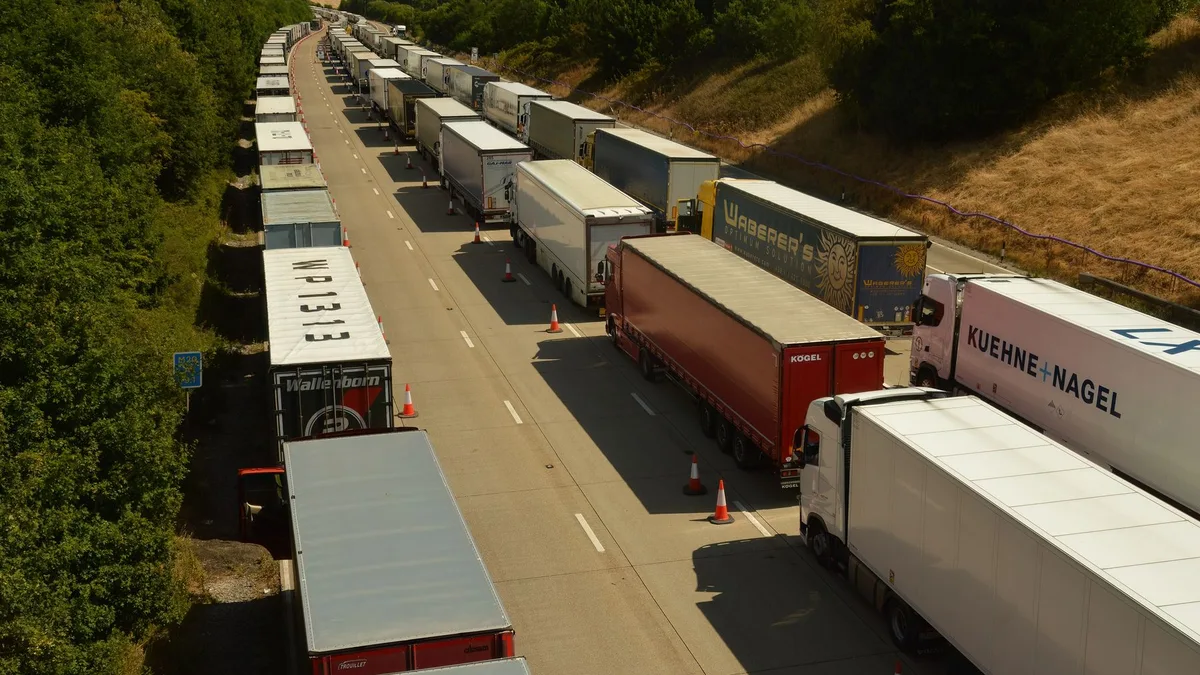
A dispatcher in Lutsk received an offer that looked like a gift. Loading in Poznan, unloading in Hamburg, a rate good enough to accept without thinking. The company holds no permits, because it has not needed them since 2022: the EU Ukraine agreement removed them. The dispatcher filed an RMPD, picked "transport dwustronny" in the form because that is what he always picked, and released the truck. At the first roadside check in Poland the run was classified differently.
A run loading in Poland and unloading in Germany is carriage to or from a third country, not bilateral carriage and not transit. The EU Ukraine agreement does not cover it: its Article 4 gives a closed list of permitted journeys, and carriage between two EU Member States is not on that list. Such a run needs a Polish permit of the type do lub z państwa trzeciego or an ECMT permit, and an RMPD filing is required in either case.
For a reader meeting this system for the first time. RMPD is the Polish register in which a non-EU carrier files every run across Poland, and the permit types below come from Polish road transport law.
In brief: Polish law knows four types of carriage, each with its own permit type: bilateral, transit, to or from a third country, and cabotage (§ 2 of the permits regulation) · a "third country" is defined against the state named in the permit, and such a permit covers carriage between Poland and a state other than the one named (§ 4 ust. 1 pkt 4) · the EU Ukraine agreement covers only carriage between the Parties and transit, and expressly leaves carriage between EU Member States outside its scope (Article 2) · Article 4 of the agreement is a closed list of four journey types, and the agreement runs until 31 March 2027 · Poland to Germany is third-country carriage for a Ukrainian operator and needs a permit or an ECMT permit · Latvia to Germany through Poland is transit for Polish law, because nothing is loaded or unloaded in Poland · an RMPD filing is required in all four types, cabotage included (art. 28b ust. 1 and 2), and a misclassification costs 12,000 zł.
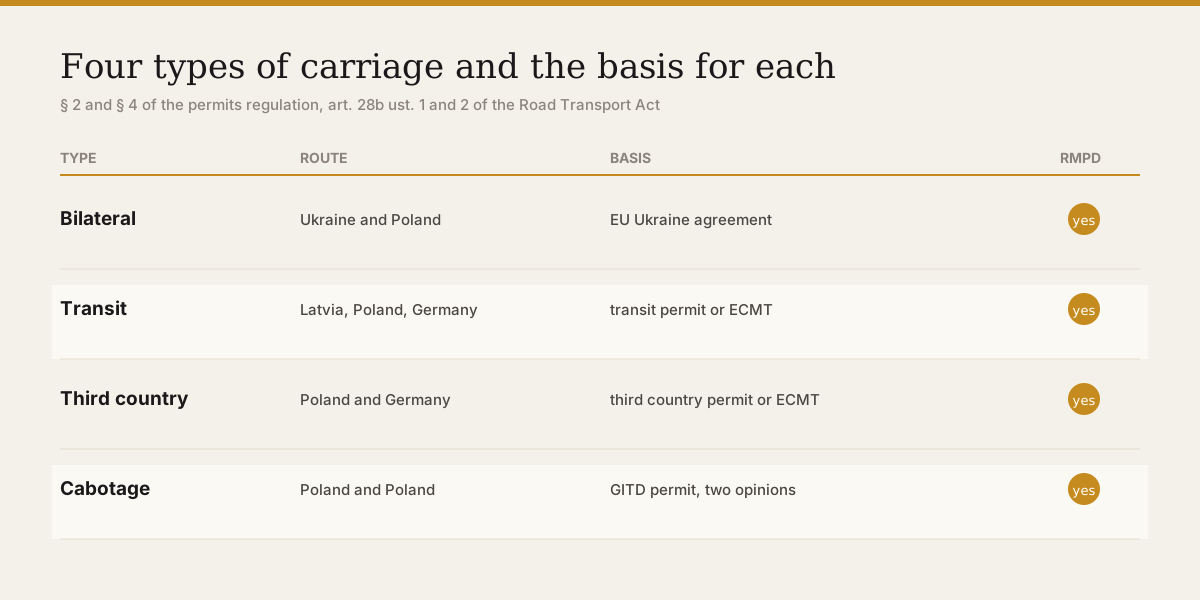
What four types of carriage Polish law knows
Polish law knows four types of carriage and provides a separate permit type for each. The list sits in § 2 of the regulation of the Minister of Infrastructure and Development of 3 April 2014 on permits for the international road carriage of goods and for cabotage. The conditions for using each permit sit in § 4 of the same regulation.
| Type of carriage | What it is in practice | Permit |
|---|---|---|
| Bilateral | between Poland and the state named in the permit | for bilateral carriage (§ 4 ust. 1 pkt 1) |
| Transit | across Polish territory, with no loading or unloading there | for transit carriage (§ 4 ust. 1 pkt 2) |
| To or from a third country | between Poland and a state other than the one named in the permit | for carriage to or from a third country (§ 4 ust. 1 pkt 4) |
| Cabotage | between two places inside Poland | for cabotage (§ 4 ust. 2) |
The classification rests on two things: where the goods were taken on and where they are handed over. The carrier's country of registration does not by itself determine the type of carriage; it determines which state is named in the permit. For a Ukrainian company that state is Ukraine, and everything else follows from there.
What the EU Ukraine agreement actually allows
The EU Ukraine agreement grants two rights and withholds a third: carriage between the Parties and transit, but not carriage inside the European Union. Article 2 says so directly, and the wording is worth reading verbatim: "The carriage of goods by road within a Member State of the European Union or between Member States of the European Union is outside the scope of this Agreement".
Article 4 lists the permitted journeys and the list is closed. Four types are allowed:
- a laden journey whose point of departure and point of arrival are in the territory of two different Parties;
- a laden journey from the territory of the Party of establishment to the territory of the same Party, transiting the other Party;
- a laden journey to or from the territory of the Party of establishment to a third country, transiting the other Party;
- an unladen journey in connection with one of the three above.
The European Commission describes this as a partial liberalisation granting "transit and bilateral transport rights", which is exactly why no permits are needed for such runs.
Can a load be taken in Poland and carried to Germany under the agreement? No. Both points lie in the territory of one Party, the European Union, and Article 2 takes carriage between Member States out of the agreement's scope. The agreement itself has been extended until 31 March 2027.
Why a run from Poland to Germany is third-country carriage
Loading in Poland with unloading in Germany is, for a Ukrainian operator, carriage to or from a third country. The mechanism is plain: a permit of that type covers carriage between the territory of Poland and the territory of a state other than the one named in the permit (§ 4 ust. 1 pkt 4). The permit of a Ukrainian company names Ukraine, the unloading is in Germany, so Germany is that "other" state.
Such permits are not issued to the carrier by a Polish authority directly. Poland sets the size of the quota by agreement with the competent authorities of the other state (art. 29c ust. 1 of the Road Transport Act), and the Chief Road Transport Inspector produces the permit forms and sends them abroad (art. 29c ust. 2). In practice the carrier receives the form through the Ukrainian side out of an agreed quota rather than buying one on the road.
The second possible basis is an ECMT permit, the multilateral permit of the International Transport Forum. The act names it alongside an ordinary permit (art. 28b ust. 1), and the RMPD form has separate fields for it: number, period of validity and the code of the carrier's country of establishment (art. 28b ust. 3 pkt 10 lit. a).
An ECMT permit covers carriage between member countries of the system and transit through them, and Ukraine, Poland, Latvia and Germany all belong to it. It carries a limit that operators tend to discover on the third run. After the first laden journey between the country of establishment and another member country, the carrier may perform at most three laden journeys in which the country of establishment does not take part. After those the vehicle, laden or empty, has to return to the country of establishment (point 3.13 of the ECMT Multilateral Quota User Guide, January 2026 edition).
Can a Poland to Germany run be done on an ECMT permit? Yes, but not more than three in a row. Unladen journeys outside the country of establishment do not count towards the limit, because they are not transport operations. A journey or an empty run into Ukraine, or in transit through it, counts as the return. An ECMT permit also grants no right of cabotage (point 4.3) and is not valid for carriage between a member country and a country outside the system (point 3.2).
How to classify a run from Latvia to Germany through Poland
A run loading in Latvia and unloading in Germany is transit for Polish law, not third-country carriage. The reason is that nothing is loaded or unloaded in Poland, while a third-country permit describes carriage between Poland and another state (§ 4 ust. 1 pkt 4). Where Poland is neither the start nor the end of the carriage, that permit type has nothing to attach to.
Two different things are easy to confuse here. "Carriage between third countries" in an operator's everyday language means any run involving neither Ukraine nor the country of registration: that is a commercial description of the operation, not a category of Polish permit. Polish law looks more narrowly, only at its own territory, and asks one question: are the goods taken on in Poland, handed over in Poland, or only passing through. Goods travelling from Latvia to Germany only pass through, so transit.
The EU Ukraine agreement does not cover this run either, because Latvia and Germany are two EU Member States, that is one Party. So the Polish leg needs a transit permit or an ECMT permit with the same three journey limit, and separate grounds are needed for entering Latvia and Germany under their own rules. Who has to file at all, and since when, is taken apart in Who must file an RMPD and since when.
Why "third country" means three different things
The phrase "third country" carries three different meanings in this subject, and confusing them produces most classification errors.
| Where it appears | What it means | Example |
|---|---|---|
| EU Ukraine agreement | a state outside the Parties, so neither Ukraine nor an EU Member State | Moldova, Turkey |
| Polish permit | a state other than the one named in the permit | Germany in the permit of a Ukrainian company |
| ECMT system | a country outside the multilateral permit system | a country not in the forum |
Hence something counter-intuitive: Germany is not a "third country" within the meaning of the EU Ukraine agreement, because it is part of a Party. And the same Germany is a "third country" within the meaning of a Polish permit, because the permit names Ukraine. One phrase, two opposite conclusions, both correct in their own document.
Is an RMPD filing needed in each of these cases
An RMPD filing is needed in all four types of carriage. The act ties the duty not to the type of run but to three situations at once. A permit is required for the carriage, or the carriage runs on an ECMT permit, or an international agreement exempts the carrier from holding those permits (art. 28b ust. 1 of the Road Transport Act). Cabotage has its own paragraph in the same article (art. 28b ust. 2), so it too is not performed without a filing.
That construction breaks the most common hope: "I do not need a permit, so I do not need a filing." The opposite holds, because an exemption from the permit is one of the grounds of the duty rather than an exception to it. This is exactly why the form has a field for the legal basis of the exemption (art. 28b ust. 3 pkt 10 lit. b): the register wants to know why no permit exists.
An empty run does not lift the duty. The form has a separate field for whether the carriage is performed with or without a load (art. 28b ust. 3 pkt 8), and the agreement itself lists unladen journeys in Article 4 as a permitted type of their own.
What to choose in the RMPD form
In the RMPD form the type of carriage and the legal basis are two different fields, and they have to agree with each other. The type of carriage takes the same four values as the permits regulation: transport dwustronny, transport tranzytowy, transport państwa trzeciego, kabotaż. The basis is either a permit number, or an ECMT permit with its period of validity, or brak obowiązku zezwolenia with a reference to a specific provision of the agreement.
The dictionary of exemption grounds on PUESC repeats Article 4 of the agreement point by point. Option A is a journey between the territories of two different Parties, B a journey to the territory of the same Party transiting the other. Option C is a journey to or from the territory of a Party to a third country, D an unladen journey connected with the previous ones. For a Poland to Germany run the dictionary holds no option that would describe such a run, and that is not a gap in the dictionary but a reflection of Article 2 of the agreement.
Can the generic option "journey under the agreement between Ukraine and the EU" be picked without going further? Formally yes, in practice risky. Performing international carriage contrary to the provisions of an international agreement is a separate penalty of 12,000 zł (Annex 3, item 3.2), and untrue data in the filing is another one of the same size. How each field of the form relates to the consignment note is taken apart in What transfers from CMR to RMPD100 and what does not.
Can a Ukrainian carrier perform cabotage in Poland
A Ukrainian carrier can perform cabotage in Poland, but only with a cabotage permit, and obtaining one is hard. The permit is issued by the Chief Road Transport Inspector by administrative decision (art. 29 ust. 1 of the Road Transport Act), and the application has to carry at least two positive opinions from nationwide organisations of road carriers (art. 29 ust. 2). This is not a form out of a quota but a decision on a case.
The EU Ukraine agreement grants no right of cabotage: Article 2 takes carriage inside an EU Member State out of the agreement's scope in the same sentence as carriage between Member States. The act does provide for cabotage without a permit on the basis of an international agreement (art. 29a ust. 1), but that requires an agreement which grants the right, and the agreement in force with the EU does not.
Cabotage without the required permit costs 12,000 zł, and so does cabotage contrary to the conditions laid down for it (Annex 3, items 3.5 and 3.6). Together with the RMPD filing that cabotage also requires, these are two independent duties with two separate penalties.
What our own data shows
On our platform's data a Ukrainian operator almost always carries bilaterally, and third-country carriage appears in single runs. Ten carriers pulled 5,710 declarations into Sigil from their own PUESC history for the period from 30 October 2024 to 25 September 2026. The split is this: 5,066 bilateral, 642 transit, 2 to a third country, and no cabotage at all.
Both third-country declarations were filed on an ECMT permit rather than on the agreement. That is the best illustration of the rule in Article 2: where a run falls outside the agreement, a permit becomes the basis. Across 274 declarations that eleven companies filed through Sigil between 12 June and 25 September 2026 there is not a single third-country run, and eight transit runs.
These are our platform's data, not the market's: eleven companies are not a cross-section of the industry. The direction they show is the same as the structure of the agreement, though. Almost the entire volume of a Ukrainian operator sits in the two permitted types, and a run outside them is a decision that has to be prepared separately.
What a misclassification costs
A misclassification costs 12,000 zł, and the penalty table holds more than one item for it. The amounts come from Annex 3 to the Road Transport Act, converted into hryvnia at the National Bank of Ukraine rate of 11.67 ₴/zł on 27 September 2026.
| Breach | Amount | Basis |
|---|---|---|
| International carriage without the required permit in the vehicle | 12,000 zł (≈ 140,000 ₴) | Annex 3, item 3.1 |
| International carriage contrary to an international agreement or to the conditions of the permit | 12,000 zł (≈ 140,000 ₴) | item 3.2 |
| No RMPD filing, or data incomplete or not matching the facts | 12,000 zł (≈ 140,000 ₴) | item 3.2a |
| Cabotage without the required permit | 12,000 zł (≈ 140,000 ₴) | item 3.5 |
| Cabotage contrary to the conditions laid down for it | 12,000 zł (≈ 140,000 ₴) | item 3.6 |
Money is not the whole price. If a check reveals carriage without the required filing, the authority directs or removes the vehicle to the nearest guarded car park at the carrier's cost. The carriage may continue only once the filing has been sent and a reference number obtained (art. 89a1 ust. 1a). The truck stands, the car park is paid for, and the customer waits.
The items do not exclude one another. A Poland to Germany run without a third-country permit and with bilateral carriage picked in the form grounds both item 3.1 and item 3.2a. The full table of penalties from both systems is collected in SENT and RMPD fines 2026.
What to do
- Determine the type of carriage from two points, the country of loading and the country of unloading, rather than from how many borders the truck will cross.
- Check before accepting an order whether both points lie outside Poland or one of them is in Poland, because that decides between transit and a third country.
- Take a run loading in Poland and unloading in another EU Member State only when you hold a third-country permit or a valid ECMT permit.
- Count the three journey limit on an ECMT permit when the same vehicle takes consecutive runs inside the Union.
- Enter in the RMPD form the type of carriage that matches the route, and a basis that agrees with it.
- Pick the specific option in the dictionary of exemption grounds rather than the generic one, because the specific one names the journey type you are actually performing.
- File the RMPD regardless of whether a permit is required, because an exemption from the permit is a ground of the duty, not an exception to it.
What not to do
- Do not treat the EU Ukraine agreement as a pass for any run across Europe. It covers carriage between the Parties and transit, and a run between EU Member States is 12,000 zł for carriage contrary to the agreement.
- Do not pick bilateral carriage in the form because that is what was picked last time. The type of carriage is read off the route, not off the history of filed declarations.
- Do not plan cabotage in Poland without a permit from the Chief Road Transport Inspector. Two positive opinions from carrier organisations are a condition of the application, not a formality.
- Do not assume an empty run does not count. The form has a separate field for the load, and the agreement lists unladen journeys as a permitted type of their own.
- Do not send the driver out before it is settled on what basis he travels. Without a filing the truck goes to a guarded car park at your cost.
Where technology fits in
Sigil carries the RMPD filing and does not decide for the dispatcher which type of carriage is being performed. The type of carriage and the legal basis are fields a person confirms, because they are what decides whether the run is lawful, and the act treats an error in them as data not matching the facts. CMR data go into the declaration one to one, the dispatcher checks them against the original, and only after that confirmation does the filing go to PUESC under the carrier's own credentials.
Sigil keeps the dictionary of exemption grounds in the form in which PUESC serves it, with the full text of every option in four languages. The dispatcher sees what is being picked rather than a three digit code.
Sigil handles RMPD declarations. Carriage permits are issued by authorities rather than by a platform, and the system obtains no permit on the carrier's behalf.
A demo or training for your team
30 minutes online. We show how Sigil™ files an RMPD from a CMR and answer questions about your runs.
Frequently asked questions
- Is loading in Poland with unloading in Germany carriage to a third country?
- Yes. A permit of that type covers carriage between Poland and a state other than the one named in the permit (§ 4 ust. 1 pkt 4 of the permits regulation). The permit of a Ukrainian company names Ukraine, so Germany is the third country here.
- Does the EU Ukraine agreement cover a run from Poland to Germany?
- No. Article 2 of the agreement takes carriage between EU Member States out of its scope, and Article 4 gives a closed list of four permitted journey types, which does not include such a run.
- Is a run from Latvia to Germany through Poland transit or third-country carriage?
- Transit. Nothing is loaded or unloaded in Poland, and a third-country permit describes carriage between Poland and another state. The Polish leg needs a transit permit or an ECMT permit.
- Is an RMPD filing needed when no permit is required?
- Yes. An exemption from the permit under an international agreement is one of the three grounds of the duty (art. 28b ust. 1 of the Road Transport Act), not an exception to it. Cabotage has its own paragraph in the same article.
- May a Ukrainian carrier perform cabotage in Poland?
- Only with a GITD permit. The permit is issued by the Chief Road Transport Inspector by administrative decision, and the application needs at least two positive opinions from nationwide organisations of road carriers (art. 29 ust. 1 and 2). The EU Ukraine agreement grants no right of cabotage.
Sources
Legislation:
- Regulation of the Minister of Infrastructure and Development on permits for the international road carriage of goods and for cabotage, ISAP, consolidated text Dz.U. 2017 poz. 1564: § 2 and § 4.
- Road Transport Act of 6 September 2001, ISAP: art. 28, art. 28b, art. 29, art. 29a, art. 29c, art. 89a1 ust. 1a, Annex 3 (items 3.1, 3.2, 3.2a, 3.5, 3.6).
- Agreement between the European Union and Ukraine on the carriage of freight by road), EUR-Lex: Article 2 and Article 4.
Authorities:
- EU and Ukraine extend road transport agreement until 31 March 2027, European Commission, DG MOVE, 25 September 2025.
- ECMT multilateral quota user guide, January 2026, gov.pl: points 3.1, 3.2, 3.13 and 4.3.
Rate: official hryvnia to zloty rate, 11.67 ₴/zł on 27 September 2026.
Read next
- What an RMPD is and who must file itRMPD from scratch: what the filing is, who must file it since 1 November 2024, when it is not needed, how it differs from SENT, what happens at entry without it
- How CMR data get into an RMPD, field by fieldWhich CMR box goes into which RMPD100 field, what the CMR lacks (type of carriage, permit, border), what the RMPD lacks (goods, CN). Three fields that diverge.
- SENT and RMPD fines 2026, amounts, who pays, how to appealEvery SENT and RMPD fine in one table: amount in złoty and hryvnia, who pays, article number with a link. Appeal deadlines and the difference between two acts.
- What SENT is in Poland and who the system applies toSENT is the Polish register of carriage of sensitive goods. What is monitored, who files the notification, where the reference number comes from, what it costs.
- Why PUESC rejects an RMPD and what to fix by RMPD500 codeRMPD500 rejection codes across 242 filings: R01 Cyrillic, R02 postal code, R06 dates, R30 locator not activated, crossing outside the dictionary. What to fix.
- Who files SENT, the consignor, the consignee or the carrierThe role in SENT follows the route, not the contract. Who files on import, export and transit, what the carrier completes and who pays for another's mistake.
Sigil™ turns a CMR into an RMPD declaration and files it with PUESC — with every field checked against the original.
More about RMPD