SENT
The 2026 list of goods under SENT monitoring
The 2026 SENT goods list with thresholds and CN codes: fuels, oils, grain, honey, poultry, clothing and footwear in 2026. Why Ukrainian goods count.
Published · Updated · Author: Makaiev Kostiantyn Oleksandrovych, founder of Sigil RMPD
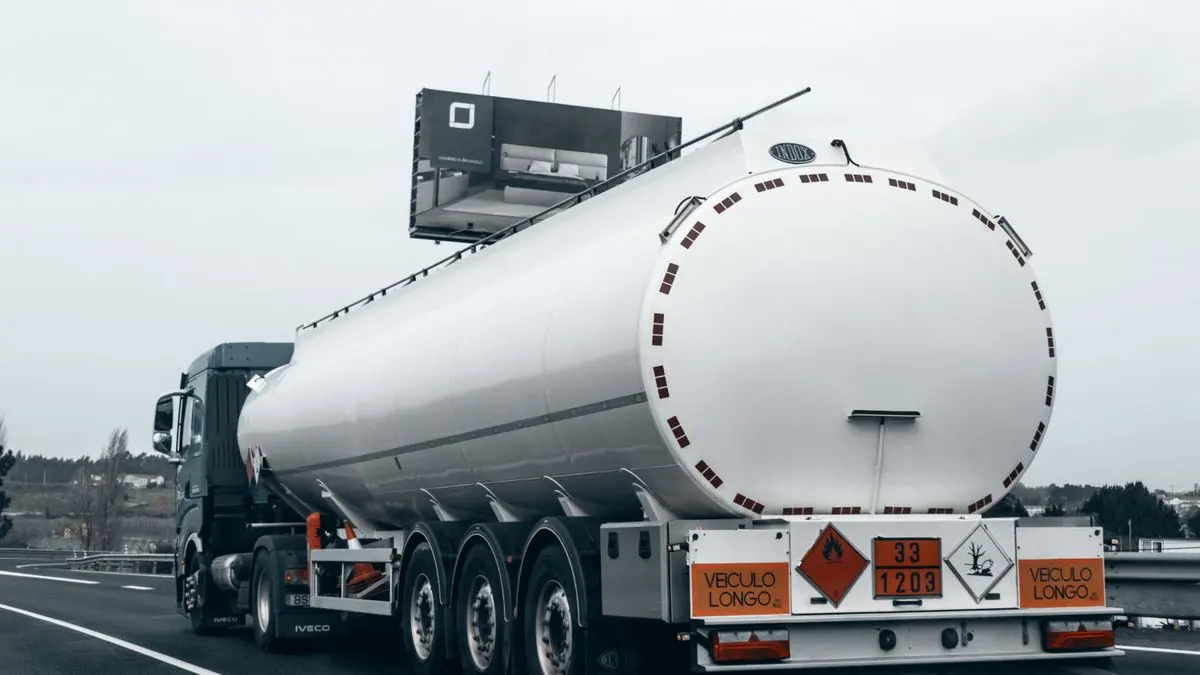
A Ukrainian truck carries 18 tonnes of sunflower oil to Germany through Poland. The carrier has filed an RMPD, the driver has the number, the locator works. At a car park near Wrocław the inspector asks for a second number, the SENT one. The dispatcher replies: "But we are not carrying fuel." Oil under CN code 1512 is on the SENT goods list from 500 kg. The same company's second truck that week carries second-hand clothing, and since 17 March 2026 clothing is on the list too, from 20 June above 31.5 kg.
SENT stopped being a system "for fuel tankers" long ago. This article gives the current 2026 list with thresholds, explains the separate rule for goods originating in Ukraine, and says who files the notification in each case. Written for a reader who meets the Polish system for the first time.
In short: SENT covers far more than fuel, alcohol and tobacco: the list includes vegetable oils from 500 kg, grain from 10 t, honey from 10 kg, eggs, poultry, frozen berries, and since 17 March 2026 clothing and footwear, with thresholds of 31.5 kg and 64 items since 20 June 2026 · for farm produce originating in Ukraine the exemptions do not apply: poultry, eggs, honey and berries from Ukraine are always under SENT · the list lives in a Minister of Finance regulation and changed twice in 2025 and twice in the first half of 2026 · whether your goods are on it, the CN code search tells you · the notification is filed by the consignor, the consignee or the carrier, depending on the route · missing it costs 46 % of the goods' value or 20,000 zł, separately from RMPD · Sigil handles RMPD; the SENT notification is filed on PUESC by the party responsible.
What SENT is and where the list is
SENT is Poland's system for monitoring the carriage of goods the state considers a tax risk: excise goods and goods often used in VAT fraud. Every carriage of such goods on Polish territory must be notified in the register on the PUESC customs portal before it starts, and a reference number obtained. It is a different duty from RMPD and a different act: SENT is about the goods, RMPD about a carriage performed by a non-EU carrier.
The list has two parts. The first is in the SENT Act itself, ustawa o systemie monitorowania drogowego i kolejowego przewozu towarów (art. 3 ust. 2): fuels and lubricants, alcohol, dried tobacco, medicines. The second is added by the Minister of Finance by regulation (art. 3 ust. 11), and that part changes most often: twice in 2025, in September (clothing and footwear) and in November (a new wording of the farm produce list).
The SENT goods list for 2026
The threshold applies to the mass or volume of the whole consignment in one vehicle, not to a single package. CN codes come from the customs declaration, the invoice or the CMR.
| Group | Goods (CN code) | Threshold | Where it is written |
|---|---|---|---|
| Fuels and chemicals | petrol, diesel, lubricants, solvents (2707, 2710, 2905, 2917, 3403, 3811, 3814, 3820, 3824, 3826) | over 500 kg or 500 l | art. 3 ust. 2 pkt 1 of the SENT Act |
| Heating fuels | any quantity | no threshold | art. 3 ust. 2 pkt 1a |
| Alcohol | ethyl alcohol without excise stamps (2207); completely denatured alcohol | over 500 kg or 500 l | art. 3 ust. 2 pkt 1 and 2 |
| Tobacco | dried tobacco without excise stamps | no threshold | art. 3 ust. 2 pkt 3 |
| Medicines | medicines, special foods and medical devices on the shortage-risk list | under pharmaceutical law | art. 3 ust. 2 pkt 3a |
| Oils | vegetable oils and fats (1507 to 1516, 1517 except margarine), including sunflower oil 1512; from 31.10.2026 also 1518 | over 500 kg or 500 l | § 1 pkt 1 of the regulation |
| Gas | propane, butane and mixtures (ex 2711) | no threshold | § 1 pkt 4 |
| Coal | coal, briquettes (2701), coke (2704) | over 500 kg | § 1 pkt 8 |
| Denatured alcohol, methanol | goods with alcohol over 50 % denatured with isopropanol; synthetic methanol (ex 2905 11 00) | over 500 kg or 500 l | § 1 pkt 3 and 5 |
| Cigarette materials | cigarette paper (4813), forming tape (5910) for machine production | over 10 kg | § 1 pkt 2 |
| Waste | waste under the EU shipments regulation; hazardous paint and glue waste | no threshold; from 1,000 kg | § 1 pkt 7 |
| Poultry and eggs | poultry meat (ex 0207); eggs in shell (ex 0407); eggs not in shell (0408) | over 250 kg; over 2,500 pcs; over 100 kg | § 1 pkt 9 lit. a |
| Honey | natural honey (0409 00 00) | over 10 kg | § 1 pkt 9 lit. a |
| Frozen berries | strawberries (ex 0811 10), raspberries (0811 20 31), bilberries (0811 90 50) | over 3,000 kg | § 1 pkt 9 lit. a |
| Juice | apple juice concentrate (ex 2009 79) | over 10,000 kg | § 1 pkt 9 lit. a |
| Grain | wheat (ex 1001), maize (1005), rapeseed (ex 1205) | over 10,000 kg | § 1 pkt 9 lit. b |
| Clothing (from 17.03.2026) | knitted clothing (chapter 61), other clothing (62), worn clothing (6309 00 00) | over 31.5 kg (10 kg until 20.06.2026) | § 1 pkt 10 |
| Footwear (from 17.03.2026) | footwear (chapter 64, except 6406) | over 64 items (20 until 20.06.2026) | § 1 pkt 10 |
The regulation: Minister of Finance regulation of 25 April 2022, consolidated text Dz.U. 2024 poz. 1157, as amended by Dz.U. 2025 poz. 1244 (clothing and footwear, in force from 17 March 2026), Dz.U. 2025 poz. 1704 (farm produce, in force from 19 December 2025), Dz.U. 2026 poz. 589 (heading 1518, in force from 30 October 2026) and Dz.U. 2026 poz. 813 (new clothing and footwear thresholds, in force from 20 June 2026). The full list with every code and threshold, searchable by CN code or name, is on the SENT goods list page.
Most groups share common exemptions (§ 2 of the regulation). First: goods under the customs procedure of transit, warehousing, temporary admission or export. Second: goods in unit packages up to a set mass, for example oil in packages up to 26 kg or 26 l, coal up to 25 kg. Third: excise goods with an e-AD document. Farm produce and clothing have their own exemptions, described below. Coal has one more: carriage starting in Poland is outside SENT, and charcoal (4402) is not on the list at all, though it is an ADR dangerous good; both are taken apart in Coal and charcoal from Poland under SENT, ADR, or neither.
Why farm produce from Ukraine is always under SENT
The exception for Ukrainian goods is the most important line for anyone moving them, and it appears in none of the lists we have seen.
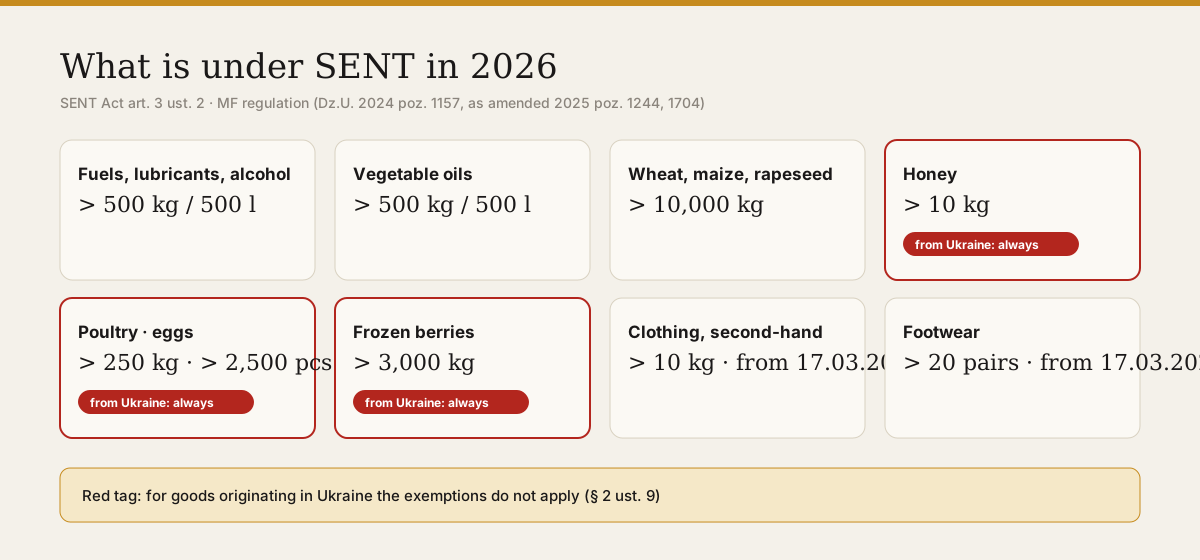
The regulation exempts farm produce from SENT in two situations: when the carriage starts in Poland (art. 5 of the act) and when the goods enter Poland from abroad (art. 6). In both it makes an exception for goods originating in Ukraine (§ 2 ust. 9 pkt 1). Poultry, eggs, honey, frozen berries and juice concentrate from Ukraine are therefore always under SENT when the consignment exceeds the threshold: on entry into Poland and on any further carriage within Poland after customs clearance.
Grain is different. Wheat, maize and rapeseed are exempt when the carriage starts in Poland and when the goods travel under the customs transit procedure (§ 2 ust. 9 pkt 2). Grain imported into Poland and cleared there is under SENT. Grain in T1 transit through Poland to Germany is not.
Is SENT needed for 5 tonnes of honey from Ukraine to a consignee in Poland? Yes. Honey above 10 kg is on the list, and the Ukraine exception removes the exemption.
Is SENT needed for 22 tonnes of Ukrainian maize in T1 transit through Poland? Not under the regulation. The customs transit procedure exempts grain. RMPD for that carriage is still required.
Clothing and footwear from 17 March 2026, new thresholds from 20 June
From 17 March 2026 SENT covers clothing of CN chapters 61 and 62, worn clothing 6309 00 00 and footwear of chapter 64. For the first three months the threshold was 10 kg for clothing and 20 items for footwear. Since 20 June 2026 it is higher: clothing from 31.5 kg, footwear over 64 items, a mixed consignment of clothing and footwear from 31.5 kg (regulation of 18.06.2026, Dz.U. 2026 poz. 813). Footwear counts in items, not pairs. This directly affects carriers of second-hand clothing and shops ordering clothing from abroad.
The regulation provides a few exceptions (§ 2 ust. 10 as worded from 20 June 2026). No notification is needed when the carriage starts in Poland, with one proviso: goods from a third country released for free circulation and travelling on to another EU country. None is needed either when the obliged party holds AEO status or a cooperation agreement with the head of the National Revenue Administration. The same applies to humanitarian aid entering Poland or in transit, and to goods a postal operator carries in parcels. The exception for goods without an invoice, in force since March, was removed on 20 June. For clothing from Ukraine entering Poland these exceptions mostly will not apply: the carriage does not start in Poland, and AEO status belongs to large businesses.
Who files the SENT notification
Who files depends on the route, and this is where most confusion arises.
The carriage starts in Poland, for example a Polish plant ships oil to Lithuania: the consignor files (art. 5 ust. 1), obtains the number and passes it to the carrier.
The goods enter Poland from abroad, for example honey from Ukraine to a consignee in Poland: the consignee in Poland files (art. 6 ust. 1) and passes the number to the carrier.
Transit from one EU country to another or to a third country through Poland, for example oil from Germany to Ukraine: the carrier files (art. 7 ust. 1). This is the only case in which SENT rests entirely on the carrier, and Sigil does not file it: the SENT notification has to be made on PUESC directly. Oil under the customs export or transit procedure needs no SENT (§ 2 ust.
In every case the carrier completes the notification with its own data: registration plate, dates, locator number (art. 5 ust. 4, art. 6 ust. 3). Without that, 10,000 zł. Goods from Ukraine in transit through Poland to another EU country without clearance in Poland fall under none of art. 5, 6 or 7: the carriage starts in a third country, not in an EU state, and PUESC answers in its FAQ (question 12.27) that the act does not list such a transit, so there is no notification.
What a missed SENT costs is collected in one table: SENT and RMPD fines 2026. In short: consignor or consignee 46 % of the goods' value, not less than 20,000 zł; carrier 20,000 zł; driver 5,000 to 7,500 zł.
The CN code serves SENT only: the RMPD100 form has no goods fields, it takes the carrier, vehicle and route data from the CMR. How both duties meet on one run and who pays for what: The difference between SENT and RMPD nobody explains.
For clothing and footwear one more exemption has applied since 20.06.2026: humanitarian aid under art. 6 or art. 7. What exactly was exempted and what stays monitored is taken apart in Does humanitarian aid need a SENT notification in Poland.
What to do
- Before every run to or through Poland, find the CN code of the goods on the invoice or customs declaration and check it against the table above. By code, not by name.
- Compare the consignment mass with the threshold. For oil, grain and berries the threshold is high; for honey it is very low: 10 kg is one box; for clothing 31.5 kg, for footwear 64 items.
- If the goods originate in Ukraine and sit in the poultry, eggs, honey, berries or juice row, assume SENT is required. The exemptions do not apply to them.
- Establish who files: consignor, consignee or you. For transit between EU countries through Poland, the carrier files.
- Obtain the SENT number before entry and hand it to the driver together with the RMPD number. They are two different numbers, and the inspector will ask for both.
- Complete the notification with your data on PUESC: registration plate, dates, locator. That is your duty even when the consignor filed.
- Check once a quarter whether the regulation has changed. The list changed twice in 2025 and may change again in 2026.
What not to do
- Do not decide "SENT or not" by the name of the goods. Oil, honey, clothing sound harmless; the CN code and the threshold decide.
- Do not rely on the consignor "knowing". A Polish consignor often does not know about the Ukraine exception.
- Do not confuse SENT with RMPD or assume one number covers both duties. RMPD is needed for any cargo, SENT for listed goods.
- Do not forget to complete someone else's notification with your data. The 10,000 zł for that is the carrier's, not the consignor's.
- Do not count clothing in pieces or footwear in kilograms, and do not count footwear in pairs. Clothing counts from 31.5 kg, footwear from 64 items.
Where Sigil fits in
Sigil handles RMPD declarations: it turns a CMR photo into a filing, lets the dispatcher confirm the data, submits it to PUESC and watches the SENT-GEO signal. Sigil does not file the SENT notification about the goods: the consignor, the consignee or, in transit, the carrier does, on PUESC. This article exists so that before the run you know whether such a number has to exist at all.
Sigil handles RMPD declarations. The SENT notification for the goods is filed by the consignor, the consignee or the carrier in transit, directly on PUESC.
A demo or training for your team
30 minutes online. We show how Sigil™ files an RMPD from a CMR and answer questions about your runs.
Frequently asked questions
- Is sunflower oil subject to SENT?
- Yes, from 500 kg or 500 l. Vegetable oils of CN headings 1507 to 1516 and 1517 (except margarine) are in § 1 pkt 1 of the regulation. Exceptions: oil in unit packages up to 26 kg or 26 l, and goods under the customs transit procedure.
- Is second-hand clothing subject to SENT?
- Yes, from 17 March 2026; since 20 June 2026 the threshold is 31.5 kg. Worn clothing has CN code 6309 00 00 and is in § 1 pkt 10 of the regulation together with new clothing (chapters 61 and 62) and footwear over 64 items. Until 20 June the threshold was 10 kg and 20 items.
- Why is honey from Ukraine under SENT while honey from Lithuania is not?
- Because of § 2 ust. 9 of the regulation. The exemption for farm produce entering Poland does not apply to goods originating in Ukraine. Honey above 10 kg from Ukraine is always notified; from Lithuania, on entry into Poland, it is not.
- Who files SENT when the goods transit Poland?
- The carrier, when the transit runs from one EU country to another or to a third country (art. 7 ust. 1 of the SENT Act). Sigil does not file that notification; it has to be made on PUESC directly. Transit from Ukraine through Poland to another EU country falls under none of art. 5, 6 or 7, so there is no notification (PUESC FAQ 12.27).
- Does an RMPD exempt from SENT?
- No. They are two different duties under two acts. RMPD is needed by a non-EU carrier for any cargo; SENT is needed for listed goods regardless of who carries them.
Sources
Legislation, as in force on the date of publication:
- Ustawa z dnia 9 marca 2017 r. o systemie monitorowania drogowego i kolejowego przewozu towarów oraz obrotu paliwami opałowymi, ISAP, consolidated text: art. 3 ust. 2 and 11, art. 5 ust. 1 and 4, art. 6 ust. 1 and 3, art. 7 ust. 1, art. 21, art. 22.
- Rozporządzenie Ministra Finansów z dnia 25 kwietnia 2022 r. w sprawie towarów, których przewóz jest objęty systemem monitorowania drogowego i kolejowego przewozu towarów oraz obrotu paliwami opałowymi, ISAP, t.j. Dz.U. 2024 poz. 1157: § 1, § 2.
- Rozporządzenie Ministra Finansów i Gospodarki z dnia 10 września 2025 r. zmieniające rozporządzenie w sprawie towarów…, ISAP, Dz.U. 2025 poz. 1244: clothing and footwear (§ 1 pkt 10, § 2 ust. 10), in force from 17.03.2026.
- Rozporządzenie Ministra Finansów i Gospodarki z dnia 27 listopada 2025 r. zmieniające rozporządzenie w sprawie towarów…, ISAP, Dz.U. 2025 poz. 1704: new wording of the farm produce list (§ 1 pkt 9), in force from 19.12.2025.
- Regulation of the Minister of Finance and Economy of 22 April 2026 amending the regulation on goods…, ISAP, Dz.U. 2026 poz. 589: CN heading 1518 among oils (§ 1 pkt 1), in force from 31.10.2026.
- Regulation of the Minister of Finance and Economy of 18 June 2026 amending the regulation on goods…, ISAP, Dz.U. 2026 poz. 813: thresholds of 31.5 kg and 64 items, new exceptions (§ 1 pkt 10, § 2 ust. 10), in force from 20.06.2026.
Authorities:
- Przewóz towarów objęty monitorowaniem (SENT), PUESC, service description, forms SENT100 to SENT500.
Exchange rate: official hryvnia to złoty rate, National Bank of Ukraine, 11.94 ₴/zł on 14 September 2026.
Read next
- SENT and RMPD fines 2026, amounts, who pays, how to appealEvery SENT and RMPD fine in one table: amount in złoty and hryvnia, who pays, article number with a link. Appeal deadlines and the difference between two acts.
- What an RMPD is and who must file itRMPD from scratch: what the filing is, who must file it since 1 November 2024, when it is not needed, how it differs from SENT, what happens at entry without it
- The difference between SENT and RMPD nobody explainsSENT follows the goods, RMPD follows a non-EU carrier. Who files which, when both meet on one run, and what a missing one costs: 12,000 and 20,000 zł.
- Does humanitarian aid need a SENT notification in PolandSince 20 June 2026 humanitarian clothing and footwear are outside SENT. What exactly was exempted, what stays monitored and why RMPD is filed anyway.
Sigil™ turns a CMR into an RMPD declaration and files it with PUESC — with every field checked against the original.
More on this topic: SENT