RMPD
Spain's DeCA from 5 October, who it binds
From 5 October 2026 domestic carriage in Spain and cabotage need an electronic DeCA. International journeys stay on the CMR. Who the duty actually binds.
Published · Author: Makaiev Kostiantyn Oleksandrovych, founder of Sigil RMPD
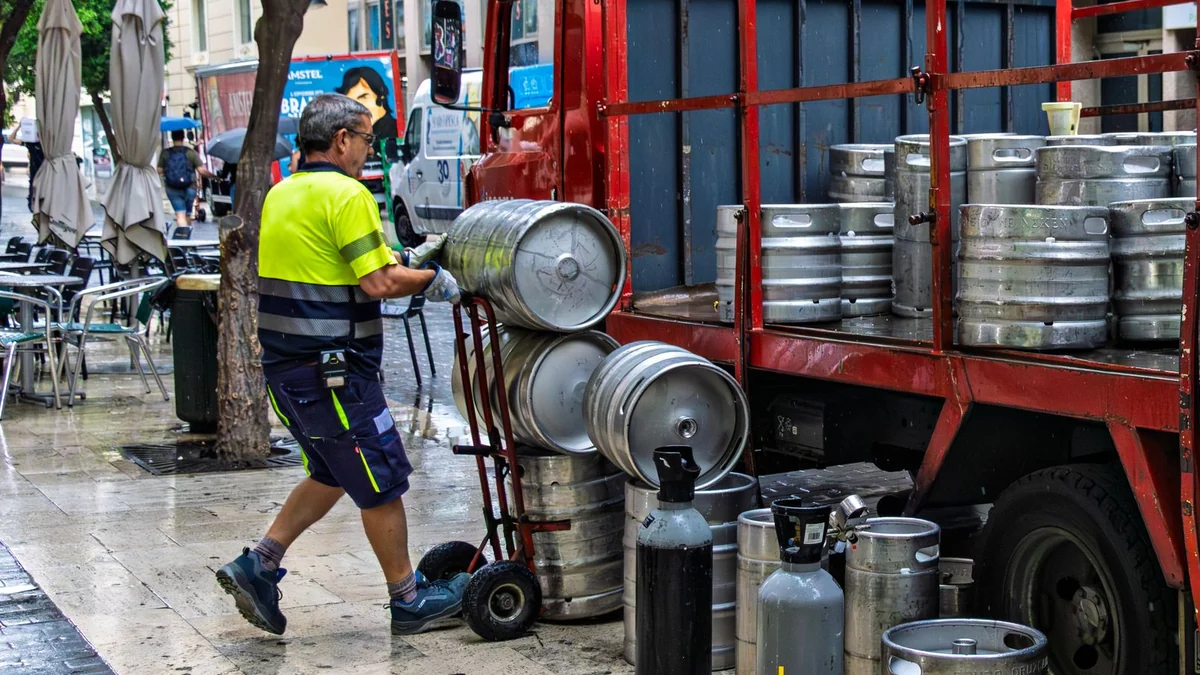
A truck unloaded in Zaragoza on Monday morning. The forwarder immediately offered the next load, Madrid with delivery in Barcelona, a decent rate, and the vehicle was standing empty anyway. The driver carried a CMR form filled in by hand, as always. That same morning, 5 October 2026, the form stopped being a sufficient document for a domestic Spanish journey.
DeCA is the Spanish electronic administrative control document, mandatory since 5 October 2026, and it covers only domestic carriage within Spain and cabotage. International journeys to or from Spain are outside the duty, where the CMR consignment note still serves. A carrier holding a Ukrainian national licence is not touched by DeCA at all, because that licence confers no cabotage rights in the European Union, while a carrier holding a Community licence is bound from the first Spanish domestic run.
In brief: DeCA has been mandatory since 5 October 2026 and the ministry provided no sanction-free phase · the duty covers domestic carriage in Spain and cabotage, while international journeys stay outside it (art. 222 ROTT) · a national licence from outside the European Union carries no cabotage rights, which only a Community licence confers (art. 8 Reg. 1072/2009) · cabotage without that right costs 4,001 to 6,000 € and the vehicle is immobilised until a deposit is paid (art. 140.1 LOTT) · a missing control document is a separate serious offence, 401 to 600 € per journey (art. 141.17 LOTT) · DeCA is not a ministry application, there is nothing to register and nothing to upload, each company produces the file itself or through a provider · a paper CMR does not cover a domestic Spanish journey, although the CMR layout may be used for the DeCA.
What DeCA is and where the date of 5 October came from
DeCA is the transport control document, which since 5 October 2026 exists only in electronic form. The full name is documento electrónico de control administrativo. The document itself is not new. The duty to carry it in the cab sits in art. 222 ROTT, and its contents in Orden FOM/2861/2012, in force since 2013. Only the medium changed.
The date comes from a transitional provision. Disposición transitoria octava of Ley 9/2025 on sustainable mobility allowed ten months from entry into force for the control document to become digital. The law entered into force on 5 December 2025, and ten months brought the deadline to 5 October 2026. Technical requirements for the file were set separately, in the Resolución of 5 June 2026.
There is no grace period. The transport ministry answered that question directly in its own FAQ: the transitional period was already set by the law itself, and the rules provide for no additional phase in which the absence of a digital document goes unpunished.
Which journeys the duty binds and which it leaves alone
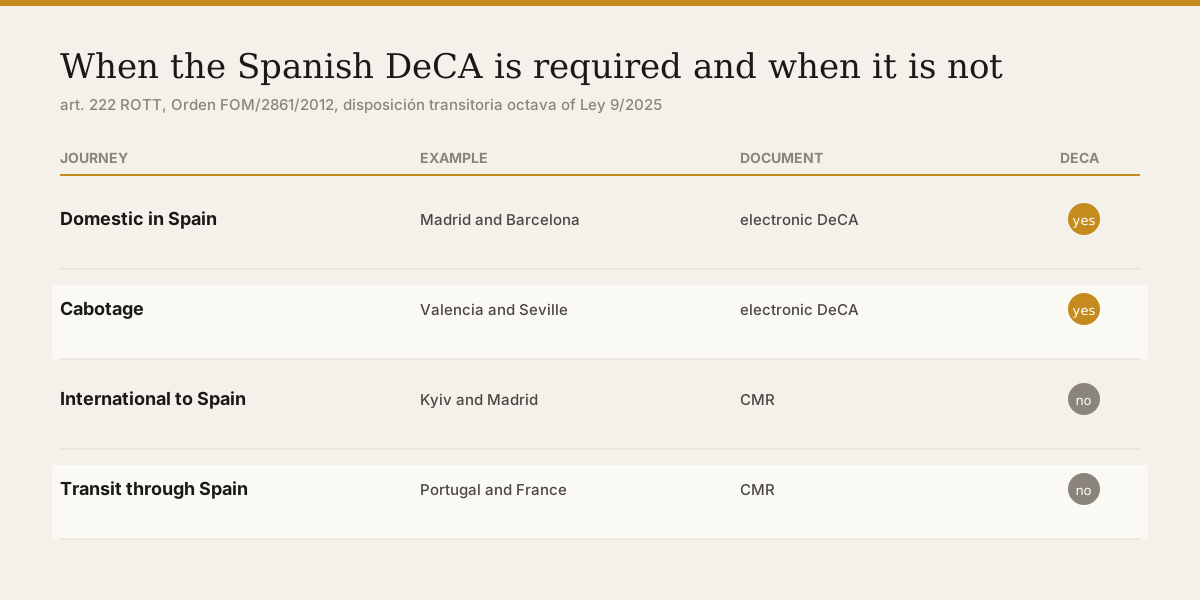
DeCA is mandatory in carriage performed inside Spanish territory and in cabotage operations, while international journeys that run partly through Spain stay outside the duty. The ministry puts it in these words. «los documentos de control administrativo son obligatorios en los transportes interiores y en las operaciones de cabotaje por territorio del Estado español, quedando fuera de esta obligación los transportes internacionales que discurran parcialmente por territorio español».
| Journey | Example | Document required | DeCA |
|---|---|---|---|
| Domestic within Spain | Madrid and Barcelona | electronic DeCA | yes |
| Cabotage after an international run | Valencia and Seville | electronic DeCA | yes |
| International to or from Spain | Warsaw and Madrid | CMR | no |
| Transit through Spain | Portugal and France | CMR | no |
A second exclusion follows the nature of the service rather than the route. DeCA is required only in public carriage of goods, meaning carriage performed for hire or reward with someone else's cargo. Own-account carriage by a company whose main business is something other than transport falls outside the duty, because art. 1 of Orden FOM/2861/2012 speaks of transportes públicos de mercancías. Removals, the recovery of damaged vehicles and parcel services involving a small number of easily handled items are excluded as well (art. 2 of the same order).
Does a Warsaw to Madrid run need a DeCA? No. That is international carriage, and the CMR consignment note remains its document. The ministry stressed separately that the electronic CMR did not become mandatory for international carriage on 5 October.
What the document has to contain
DeCA carries eight mandatory data items, and a specific party answers for each of them. The list sits in art. 6 of Orden FOM/2861/2012 and the split of responsibility in art. 7 of the same order. Digitalisation changed neither, it changed only the medium.
| Data item | Who answers for it |
|---|---|
| Name, tax number and address of the contractual shipper | contractual shipper |
| Name and tax number of the effective carrier | contractual shipper |
| Place of origin and place of destination | contractual shipper |
| Nature and weight of the goods | contractual shipper |
| Number of the special circulation authorisation, where one applies | effective carrier |
| Date on which the carriage is performed | effective carrier |
| Registration plates of the tractor unit and the trailer | effective carrier |
| Reservations and remarks of the parties, on request | the party entering them |
The last row has a practical consequence that is easy to miss. If the vehicle changes after the journey has started, the new registration has to be entered into the document, and that duty falls on the transport company. There are two ways to do it: append the new data to the same PDF together with the reason for the change, or generate a new PDF with a new address and a new QR code. In the second case the original file has to be kept.
What the file itself has to look like
A DeCA file is a PDF of up to 5 MB generated by software from stored data, not a scan. The Resolución of 5 June 2026 is unambiguous on this point: the document is created by transforming structured data into legible writing, and a digitised image of a paper form is not a document.
The remaining requirements describe how an inspector reaches the file at the roadside:
- every file has its own web address beginning with https (TLS 1.2 or newer);
- the address returns the PDF immediately, with no login page, no password and no download button;
- a QR code holding that address is embedded in the PDF itself;
- the driver carries a copy on a phone or on paper and presents either the document or the QR code alone;
- the file is kept for at least one year, and the address may be switched off seven days after the service ends.
There is nothing to register, and that deserves saying separately, because it is the point most often misunderstood. The ministry states plainly that DeCA is not one of its applications, that no central platform exists, that nothing is uploaded anywhere, and that certification applies not to DeCA software but to eFTI platforms, which are a different matter.
Who answers when the journey passes through a subcontract
Two parties answer, and the roles follow the end of the chain rather than the order in which contracts were signed. The duty to draw up the document falls on the effective carrier and the contractual shipper at the same time (art. 4 of Orden FOM/2861/2012).
When carrier A subcontracts a shipment to carrier B, B becomes the effective carrier and A becomes the contractual shipper with every duty attached to that role. For a forwarder taking a Spanish cabotage leg and passing it on, that means answering for the shipper, carrier, route and cargo data. Both parties also answer for the document being in the cab, except that the contractual shipper is released if it proves the document was issued.
Why a carrier from outside the European Union cannot take that cabotage
A carrier holding a national licence from outside the European Union cannot perform cabotage in Spain at all, and DeCA is not the main obstacle. One document confers the right to cabotage in the Union, the Community licence. Art. 8 of Reg. (EC) 1072/2009 grants that right to a haulier who holds a Community licence, and a Ukrainian national licence is not one. The EU Ukraine road freight agreement does not change this, because its Article 2 places carriage within a Member State outside the scope of the agreement.
For the party placing the order this has a concrete consequence. Subcontracting Spanish cabotage to a carrier holding a Ukrainian licence ends with the vehicle immobilised and a penalty of 4,001 to 6,000 €, while the party that placed the order stands in that carriage as the contractual shipper. Which four types of journey are actually available to a Ukrainian operator is set out in a separate piece on carriage types and permits.
A driver holding a Ukrainian passport in a European Union truck needs one more document, checked alongside the rest. It is the driver attestation, certificado de conductor in Spanish, issued by the state that issued the Community licence. Its absence from the cab costs 601 €, and running the journey with no attestation at all costs 2,001 € and the company's good repute. A driver holding European Union long-term resident status needs no attestation at all, because Orden TRM/59/2025 released such drivers from the duty on 29 January 2025.
What our own data show about cabotage
Our database holds no cabotage filing at all. As of 05.10.2026 it holds 6,469 RMPD declarations, of which 6,454 carry a completed carriage type: 5,749 bilateral, 703 transit, 2 third-country and zero cabotage. Zero over two years is not a statistical accident but a direct reflection of the fact that a Ukrainian licence confers no cabotage rights.
Spain appears in that database as well, though not in the way one might expect. Exactly six declarations name Spain as the place of loading or unloading, and all six are classified as transit, meaning a Ukraine to Spain run through Poland. Not one declaration has Spain on both ends. Precisely that journey is the one that would require a DeCA.
Whether a CMR may be shown instead of a DeCA
No, not as a paper form. The CMR layout may be used, and the ministry allows this expressly, because the control document is of free design (art. 5 of Orden FOM/2861/2012). Format and legal nature are two different things.
The ministry explains the difference as follows: in domestic carriage the CMR layout may be used where that is more convenient. That does not mean the service is performed under the CMR Convention, because the Convention does not apply to domestic carriage. Two conditions remain. All eight data items from art. 6 have to be present, and the roles of contractual shipper and effective carrier have to be marked expressly and separately. Which CMR data travel where in a Polish filing is covered in a separate piece on CMR fields in the RMPD form. The form itself has to be an electronic file meeting the Resolución.
Dangerous goods call for two documents rather than one. The ADR transport document and the DeCA are different documents with different contents. They may travel separately or be merged into a single file, but the DeCA has to be electronic either way.
What a mistake costs
| Offence | Amount | Basis |
|---|---|---|
| Domestic carriage in Spain without the required title, meaning cabotage with no right to it | 4,001 to 6,000 €, vehicle immobilised | art. 140.1 LOTT |
| Cabotage in breach of its conditions, including by a Community licence holder | 4,001 to 6,000 €, without immobilisation | art. 140.13 LOTT |
| Carriage with a driver from outside the European Union who has no driver attestation | 2,001 € and loss of good repute | art. 197.45 ROTT |
| Missing control document, missing essential data in it, or failure to keep it | 401 to 600 € per journey | art. 141.17 LOTT |
| Driver attestation missing from the cab although the attestation exists | 601 to 800 € | art. 141.9 LOTT |
| Carriage without the formal documents proving the legal ability to perform it | 201 to 300 € | art. 142.8 LOTT |
A second very serious offence within twelve months costs 6,001 to 18,000 €. Any earlier very serious offence counts towards that, not only another one of the same kind (art. 143.1(j) LOTT).
The provision on control documents rewards a literal reading, because it does not punish the driver alone. The offence is also committed by a company that failed to ensure its drivers held the required documentation in paper or electronic form. For comparison with Polish amounts, a single discrepancy between the CMR and a SENT filing costs 12,000 zł in Poland, set out in a separate analysis of the penalties.
What to do
- Establish in the order who generates the DeCA, because the duty binds both parties and by default neither performs it.
- Count the cabotage operations: three within seven days of the full unloading of the preceding international carriage, then four days of cooling off for the same vehicle in the same state (art. 8(2a) of Reg. 1072/2009). Those three operations may be spread over several Member States, at most one per State and within three days of the unladen entry into its territory.
- Test the file link from an unrelated phone, with no login. If the PDF does not download at once, the inspector will not receive it either.
- Give the driver a copy before departure, on a phone or on paper, together with the QR code.
- Put the driver attestation in the cab whenever the driver comes from outside the European Union, and check that the same state issued it as issued the licence.
- Record a change of vehicle in the document if one happens en route, and keep the original file.
- Retain the files for at least one year, which is a separate duty, penalised independently of any roadside check.
What not to do
- Do not subcontract Spanish cabotage to a carrier holding a licence from outside the European Union, because that is 4,001 € and an immobilised vehicle. ✓ Subcontract to a Community licence holder.
- Do not scan a paper form and call the scan a DeCA, because a scan is not a document. ✓ Generate the PDF from data held in a system.
- Do not place the file behind a login or a password, because the address has to return the PDF at once. ✓ Test the link in a private window before departure.
- Do not wait for a grace period, because the ministry provided none. ✓ Expect a penalty for every journey run without the document.
- Do not assume a DeCA is needed for an international journey to Spain. ✓ For international carriage the CMR consignment note remains the document.
Sigil files Polish RMPD declarations through PUESC. We neither generate nor submit the Spanish DeCA, and this text explains another country's procedure so that a vehicle is not lost on another country's market.
A demo or training for your team
30 minutes online. We show how Sigil™ files an RMPD from a CMR and answer questions about your runs.
Frequently asked questions
- Is a DeCA needed for a journey from Poland to Spain
- No. That is international carriage, and the duty covers only domestic journeys within Spain and cabotage. The CMR consignment note remains the document, and a paper CMR is still valid there.
- Who has to generate the DeCA, the shipper or the carrier
- Both. Orden FOM/2861/2012 places the duty on the contractual shipper and the effective carrier at the same time without saying who physically creates the file. Settling this in the order is therefore necessary.
- Can Spanish cabotage be subcontracted to a carrier from outside the European Union
- No. The right to cabotage in the Union comes from a Community licence (art. 8 of Reg. 1072/2009), which such a carrier does not hold. The outcome is an immobilised vehicle and a penalty from 4,001 €.
- Where do you register in order to file a DeCA
- Nowhere. The ministry states plainly that DeCA is not one of its applications, that no central platform exists and that nothing is uploaded anywhere. Each company generates the file itself or through a provider and keeps it on its own server.
- Will there be a transitional period without penalties
- No. The ministry treats the transitional period as spent by the law itself, since it ran for ten months from 5 December 2025. The rules provide for no additional phase without sanctions.
Sources
Legal acts:
- Ley 16/1987 de Ordenación de los Transportes Terrestres (LOTT), BOE: art. 140.1, art. 140.13, art. 141.9, art. 141.17, art. 142.8, art. 143.1.
- Ley 9/2025 de Movilidad Sostenible, BOE: disposición transitoria octava, in force from 05.12.2025.
- Orden FOM/2861/2012 on the control document, BOE: art. 1, art. 2, art. 4, art. 5, art. 6, art. 7, art. 9.
- Resolución of 5 June 2026 on electronic control documents, BOE no. 143 of 12.06.2026.
- Regulation (EC) 1072/2009 on access to the international haulage market, art. 8(1), 8(2) and 8(2a).
- Real Decreto 1211/1990 (ROTT), BOE: art. 197.45, art. 202, art. 222.
- Orden TRM/59/2025 on the driver attestation, BOE, in force from 29.01.2025.
Enforcement authorities:
- Documento electrónico de Control Administrativo (DeCA) and FAQ, Ministerio de Transportes y Movilidad Sostenible, as of 05.10.2026.
- Baremo sancionador, the register of offences and amounts, Ministerio de Transportes, version 7.3, law as at 14.04.2026, entries ZA01.07, ZA01.10, ZA02.01, ZA02.02, ZB01.05, ZC01.04.
Own data: 6,469 RMPD declarations in the Sigil database as of 05.10.2026, of which 6,454 carry a completed carriage type.
Exchange rate: NBU, 50.5333 ₴ per euro on 05.10.2026.
Read next
- Transit or third-country carriage, how to tellLoading in Poland and unloading in Germany is third-country carriage for a Ukrainian operator, and the EU Ukraine agreement does not cover it.
- How CMR data get into an RMPD, field by fieldWhich CMR box goes into which RMPD100 field, what the CMR lacks (type of carriage, permit, border), what the RMPD lacks (goods, CN). Three fields that diverge.
- What an RMPD is and who must file itRMPD from scratch: what the filing is, who must file it since 1 November 2024, when it is not needed, how it differs from SENT, what happens at entry without it
- SENT and RMPD fines 2026, amounts, who pays, how to appealEvery SENT and RMPD fine in one table: amount in złoty and hryvnia, who pays, article number with a link. Appeal deadlines and the difference between two acts.
- A CMR with no number now stalls the transitSince 3 August 2026 the Polish NCTS passes safety data to ICS2, and a missing or repeated CMR number gets the declaration rejected. What to check at loading.
Sigil™ turns a CMR into an RMPD declaration and files it with PUESC, with every field checked against the original.
More about RMPD